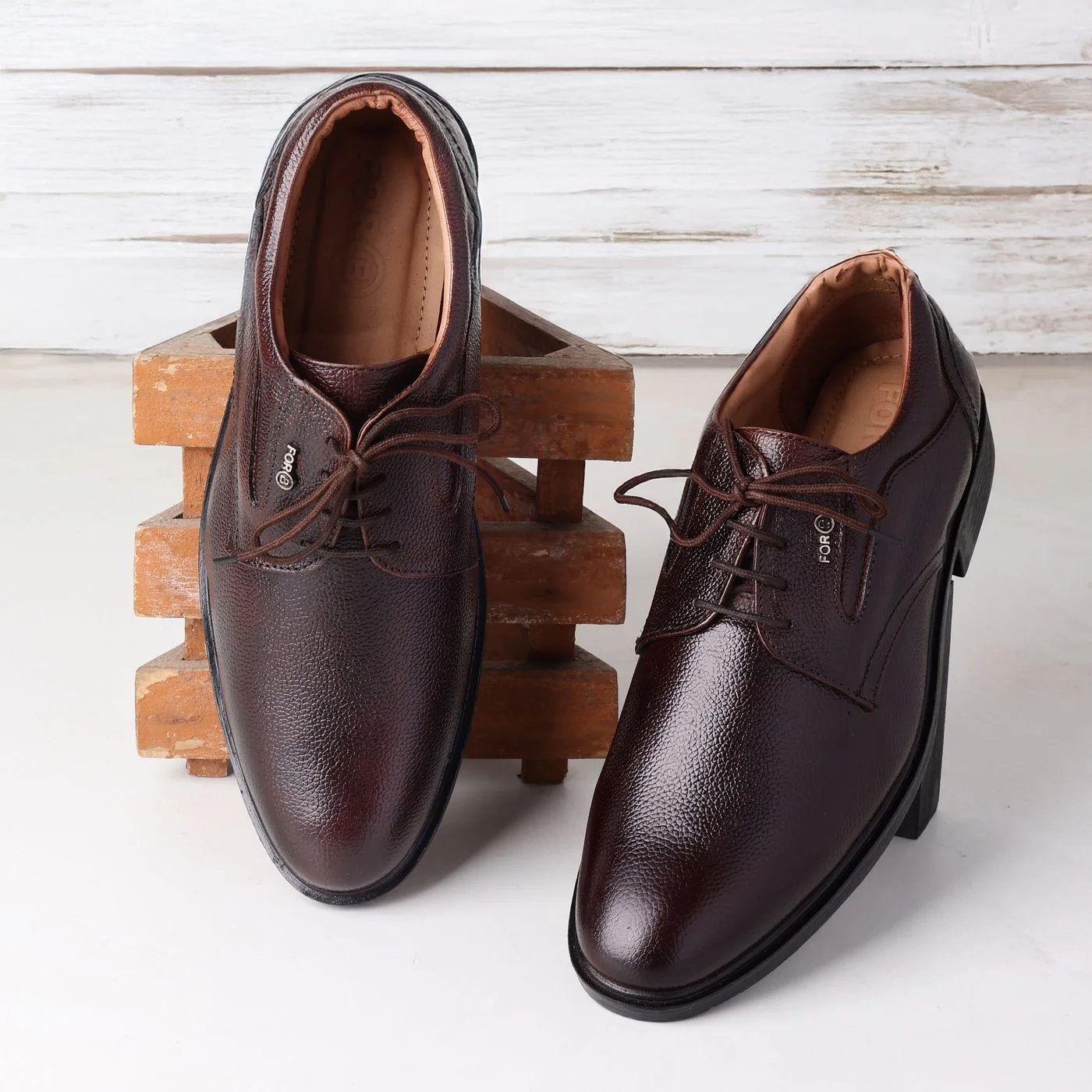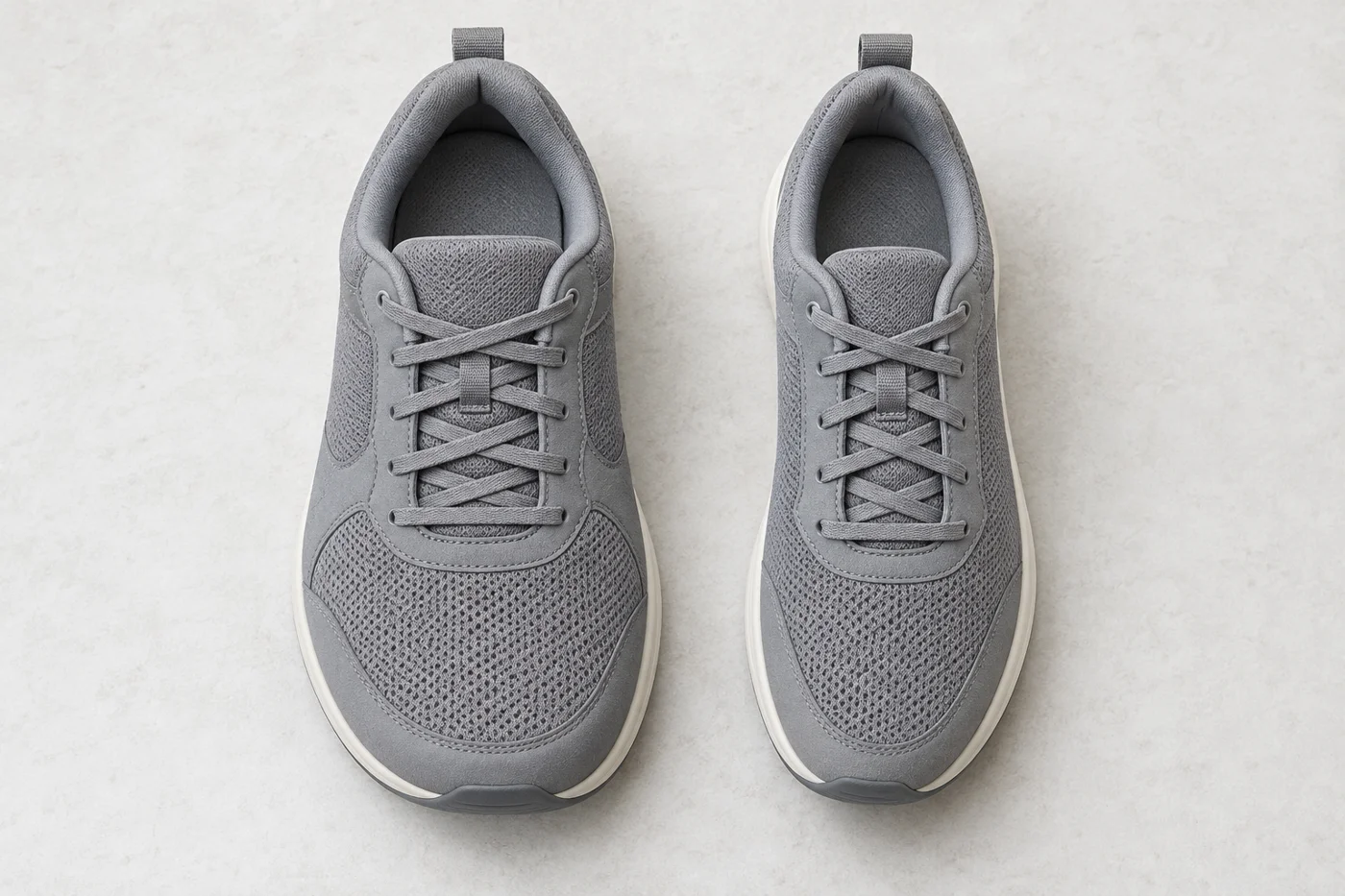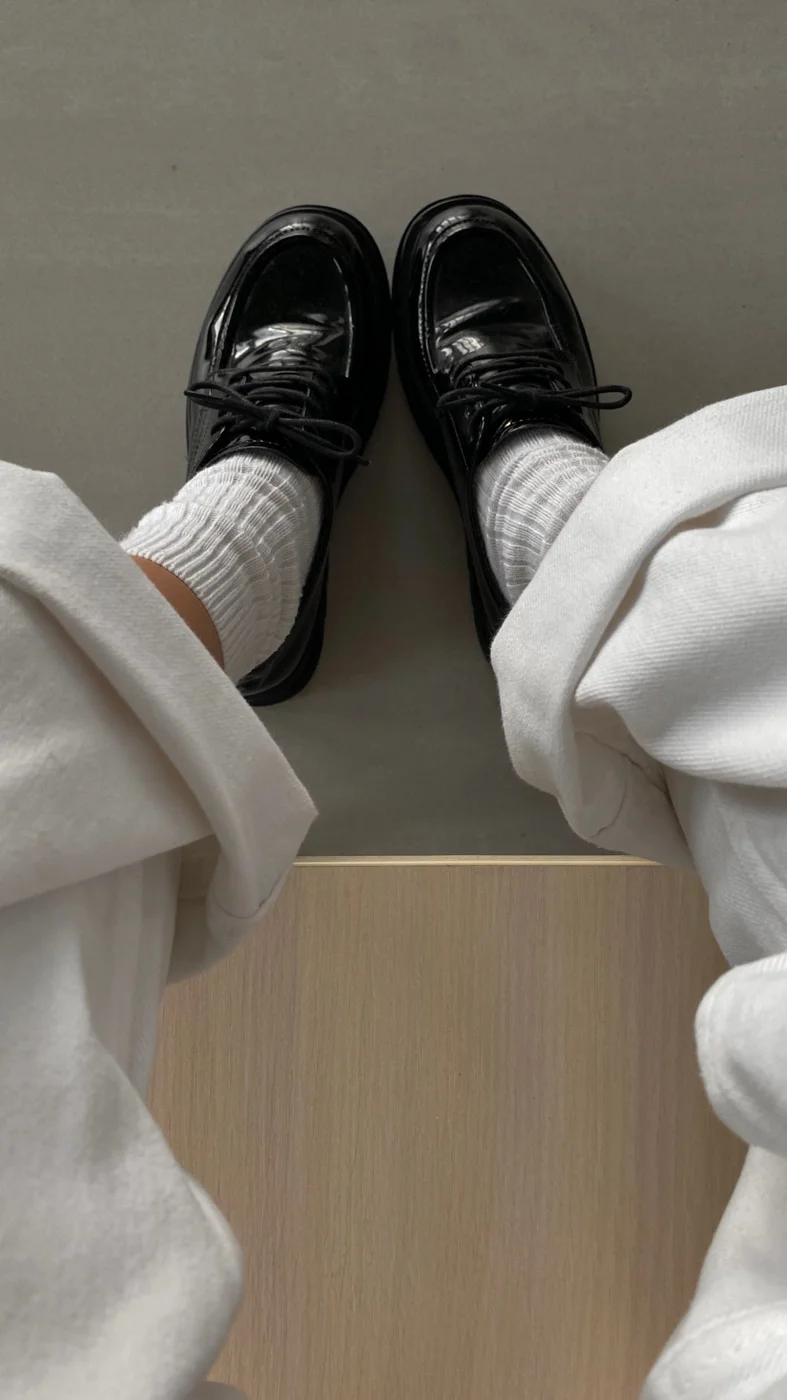
Trying shoes with whatever socks happen to be nearby can produce a misleading result. Thickness, seams, cushioning, and height all change the way the foot sits inside the shoe. Bring the pair you expect to wear most often and treat it as part of the fitting equipment.
A cushioned hiking-style sock can occupy much more space than a fine dress sock, even if both fit the same foot. The difference may appear as pressure over the instep, less toe depth, or a tighter heel. Do not assume that a shoe that fits with one will automatically work with the other.
Check the sock's own fit first
Smooth the fabric and position the heel correctly. A fold under the toes or a heel pocket sitting too high can feel like a shoe problem. If the sock itself slides, bunches, or grips uncomfortably, use a better-fitting reference before judging the footwear.
Put on both shoes and fasten them normally. Walk, turn, and sit. Notice whether the sock moves down at the heel or whether a seam presses against a toe. A shoe may hold the foot securely while still interacting poorly with the particular sock construction.
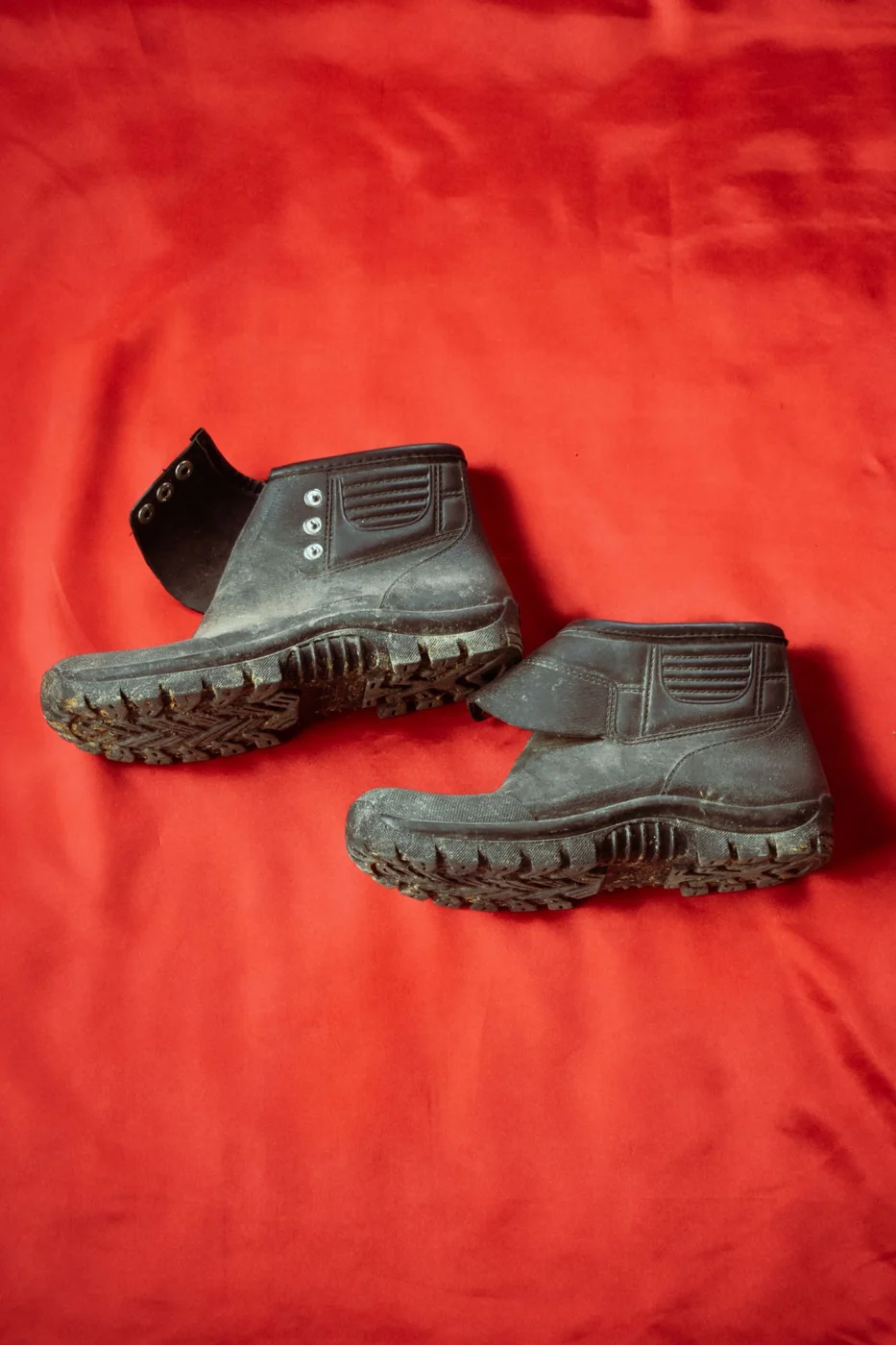
Height matters around collars and shafts. A low-cut sock may disappear into a sneaker, while a boot may need enough coverage to prevent its edge touching bare skin in a way you dislike. Check the combination during movement rather than assuming the sock will stay at its starting height.
If you need more than one sock option
For shoes used across seasons, test the realistic thin and thick choices. The closure should have enough adjustment for both without making one fit painfully tight and the other excessively loose. If it cannot, decide which season is the main role instead of expecting one pair to cover every variation.
Do not use unusually thick socks simply to fill a shoe that is otherwise too large unless that is genuinely how you want to wear it. Likewise, choosing an impractically thin sock to make a tight shoe fit can leave you with a combination you never reach for.
Once a pairing works, note the sock type alongside the shoe model and size. That small detail can explain why a later try-on feels different. The correct shoe size is not independent of what you put inside it.