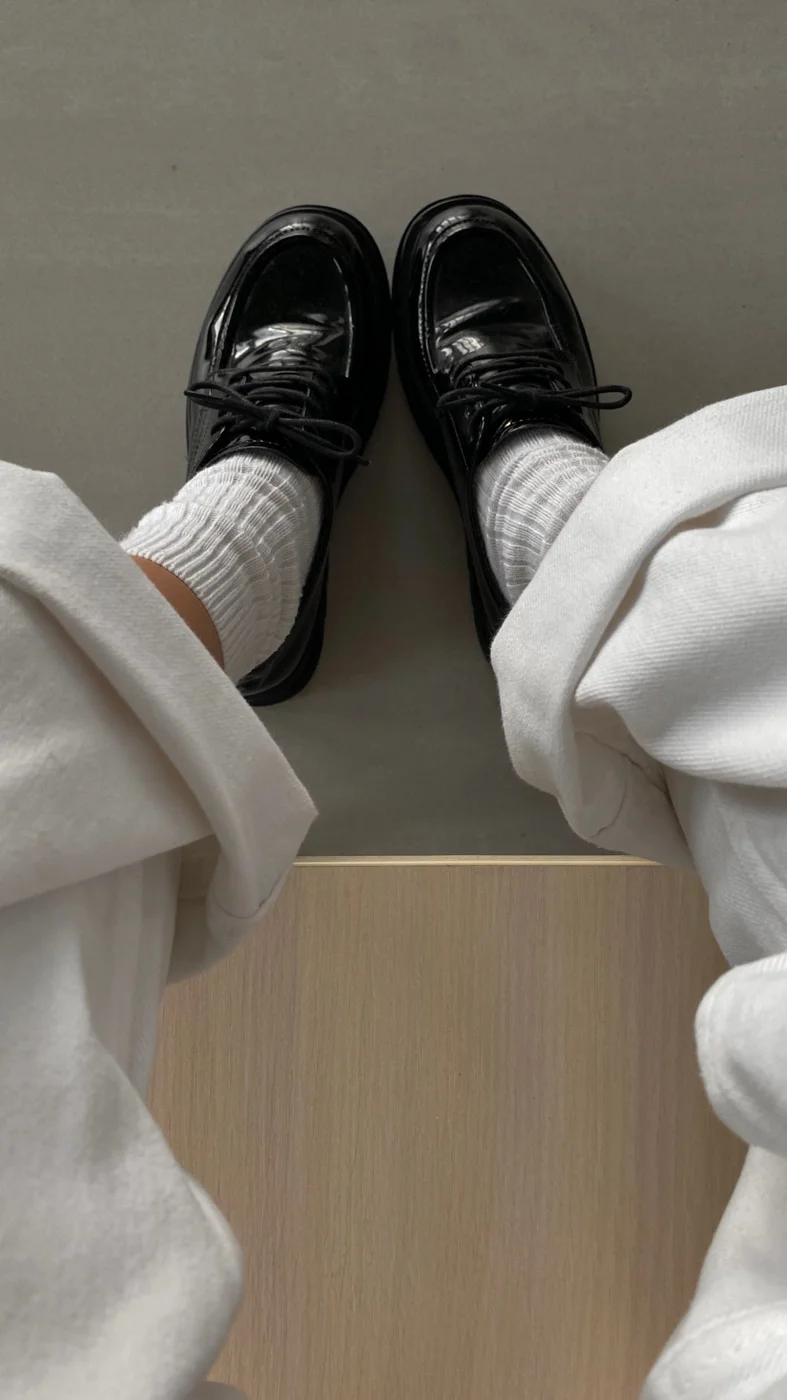
A dress shoe becomes versatile when it works with your real wardrobe, not when it is described as timeless. Start by looking at the suits or tailored separates you own and the occasions you attend. A formal office rotation and occasional relaxed events may lead to different choices.
Bring photographs or fabric references if you cannot try the full outfits. Compare color, shine, and the amount of visible detailing. A highly polished plain shoe can create a different impression from a textured or heavily decorated one, even when both are the same basic color.
Set a priority among the outfits
You may not find one shoe that is ideal with every suit. Choose the combination you wear most often as the main reference, then check the others. If a rare event requires a very different dress standard, it may be better treated as a separate need rather than distorting the everyday purchase.
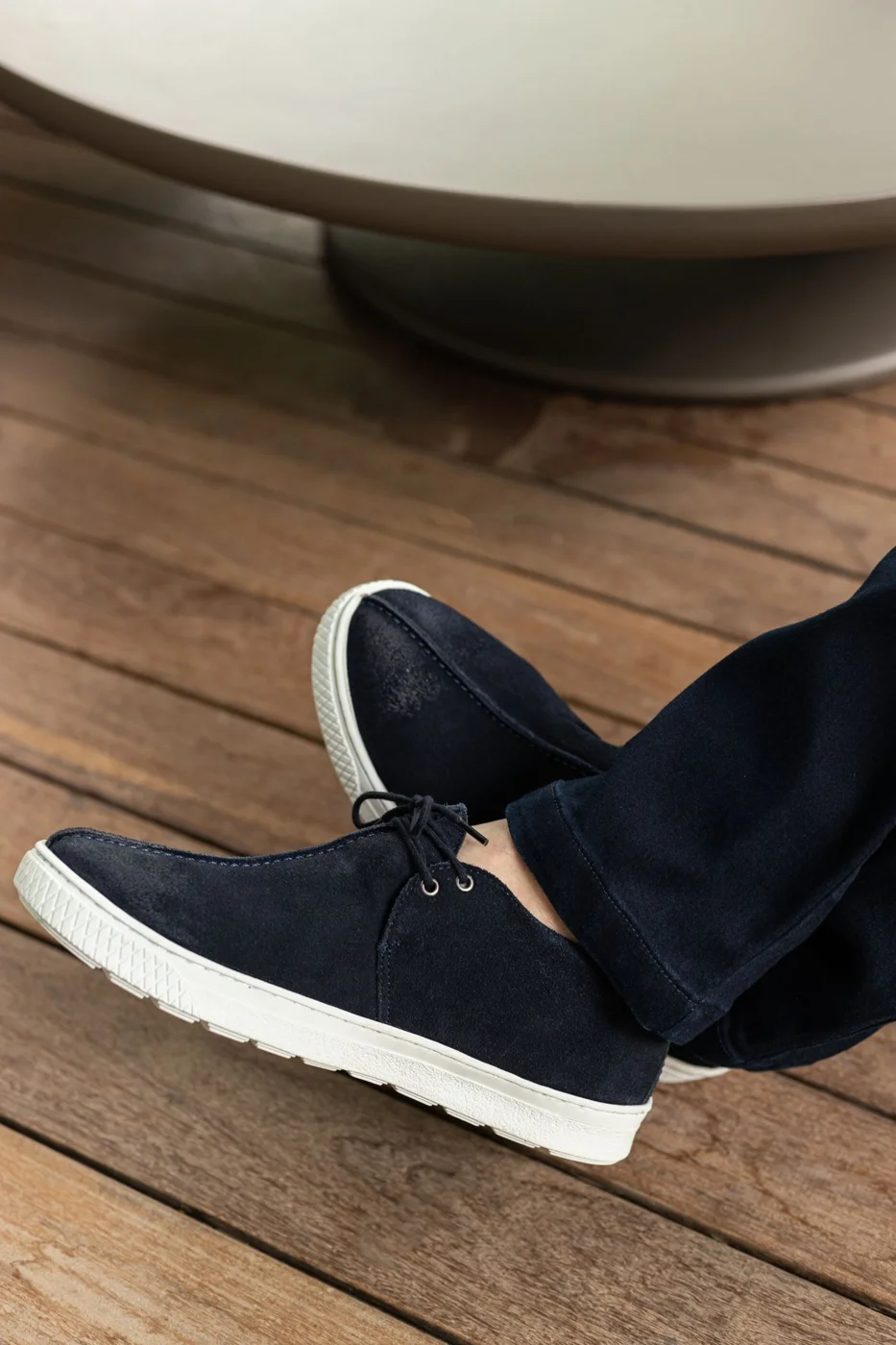
Look at the trouser hem with the shoe on. A narrow opening can interact differently with a substantial shoe than with a slim one. The break at the front and the amount of shoe visible can change the overall proportions without any issue in the shoe itself.
Fit is its own decision
Try both shoes with the dress socks you will wear. Check the forefoot, instep, and heel while standing and walking. A familiar size from sneakers is only a starting point. Lace-up designs offer some adjustment, but they cannot compensate for an incompatible toe shape or excessive length.
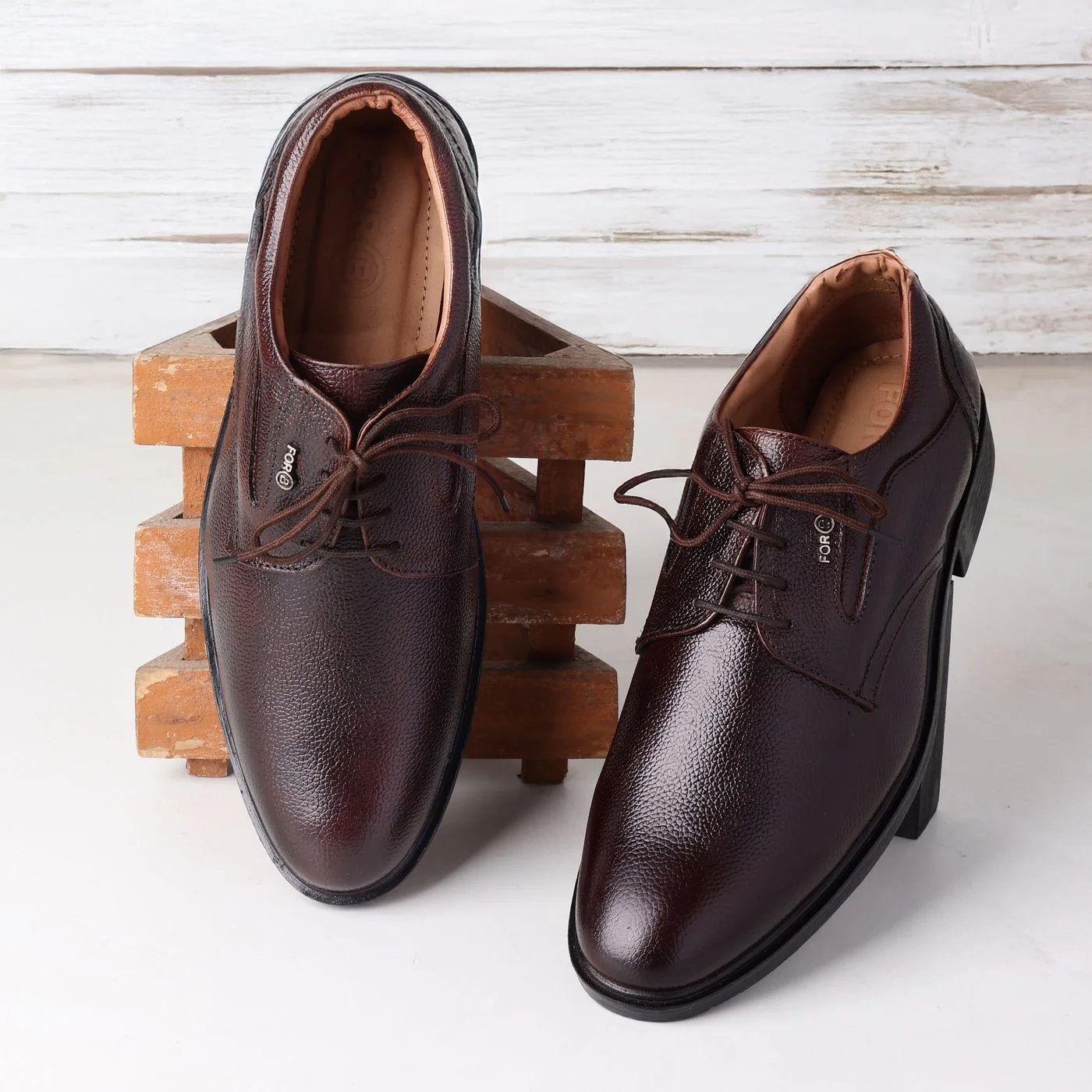
If choosing between different lacing constructions, look at how far the opening can adjust over your foot. The style that appears more formal may not be the one that fits your volume best. Comfort should not depend on forcing the eyelet rows into a particular visual arrangement.
Consider care and repair before buying, especially if the shoes will be worn frequently. Ask what repairs are available for the specific model rather than assuming all leather dress shoes can be rebuilt. A visible stitched edge alone is not enough information.
Finally, choose a finish you are willing to maintain. A shoe that only looks right after a level of polishing you will not do may be less useful than a simpler option. Versatility comes from repeated compatibility with your clothes and routine, not from trying to satisfy every possible dress code.