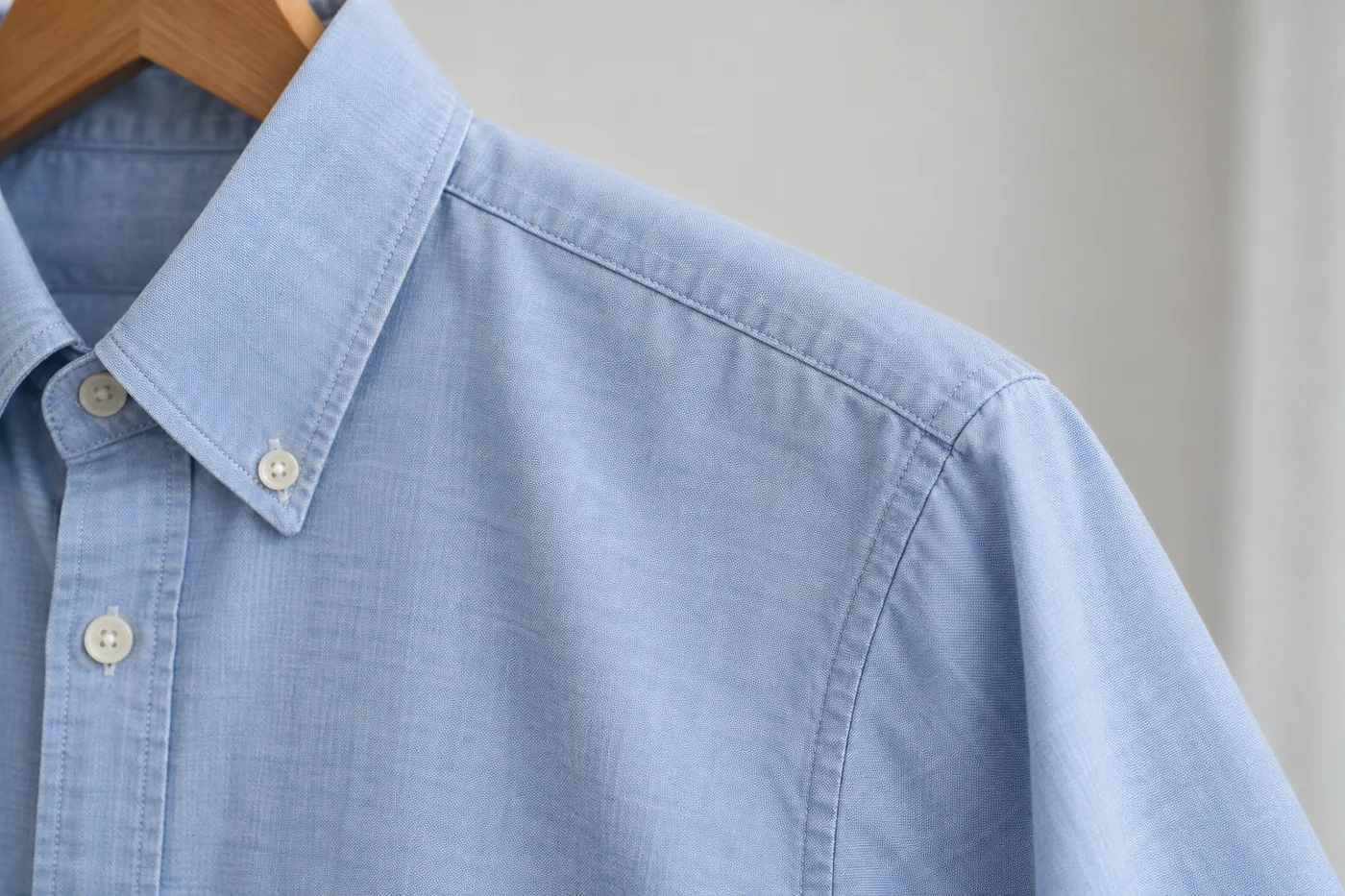
A shoulder seam does not always belong at the same point. On a conventional fitted shirt it often sits near the shoulder edge, while a dropped-shoulder design deliberately places it farther down the arm. Judging both by the same rule can make an intentional silhouette look like a sizing mistake.
Look at the product photographs and cut description before trying the shirt. Is the sleeve set into a defined shoulder, extended from a broad body, or attached along a raglan line toward the neckline? Knowing the construction helps you decide which fit signals to trust.
A conventional shoulder needs a calm seam
With your arms relaxed, inspect whether the seam lies smoothly and whether the upper sleeve hangs without obvious pulling. If the seam sits well inside your shoulder and fabric strains across the upper back, the shirt may not have enough room for your shape. If it extends well beyond the shoulder unintentionally, the sleeve and body may hang differently than you want.
The seam alone is not a verdict. A person can have a comfortable shoulder placement and still need more chest room, or a loose shoulder with a neckline that feels restrictive. Assess the connected areas rather than using one landmark to approve the whole garment.
Reach forward, not only upward
Bring your arms forward as though holding a steering wheel or reaching for a keyboard. Notice the upper back, armholes, and collar. A shirt that looks neat while standing may pull when you use your arms. Raising both arms overhead can be a useful movement check, but it is not the only movement ordinary clothing needs to accommodate.
Put on the layer you expect to wear over the shirt. Extra fabric at a dropped shoulder can bunch inside a close-fitting jacket, while a slimmer sleeve may slide through easily. That does not make either shirt better; it shows whether the combination works.
Read an oversized shirt as a whole
For a deliberately broad shoulder, compare the sleeve length, body width, and hem together. The shoulder may sit low while the cuff still ends where intended. Sizing down to move the seam inward can shorten the body or tighten another area and defeat the original shape.
If the shirt needs substantial shoulder alteration to become wearable, ask a tailor about feasibility before keeping it. Shoulder changes can involve more than moving one visible seam. Often the simpler shopping choice is a different cut that gives the desired shape without rebuilding the upper garment.