Rise and inseam describe different parts of trousers. Inseam follows the inside leg from the crotch seam toward the hem. Rise concerns the distance from the crotch area to the waistband, with front and back measurements often differing. A pair can have the right leg length and still feel wrong through the seat or waist.
This is why shopping only by waist and inseam can leave a persistent fit problem unsolved. The placement of the waistband and the shape around the torso affect how the legs hang, how pockets sit, and how the trousers feel when seated.
Find the intended waist position
Read whether the trousers are described as low, mid, or high rise, but treat those terms as relative descriptions rather than fixed measurements. Brands and styles can use them differently. If a front-rise measurement is available, compare it with a pair you already wear comfortably using the same measurement method.
Do not pull a lower-rise pair upward to force it to sit like a higher-rise design. That can create tension through the crotch and change the leg line. Likewise, wearing a high-rise pair much lower can leave extra fabric where the pattern was not intended to hang.
Measure a reference pair carefully
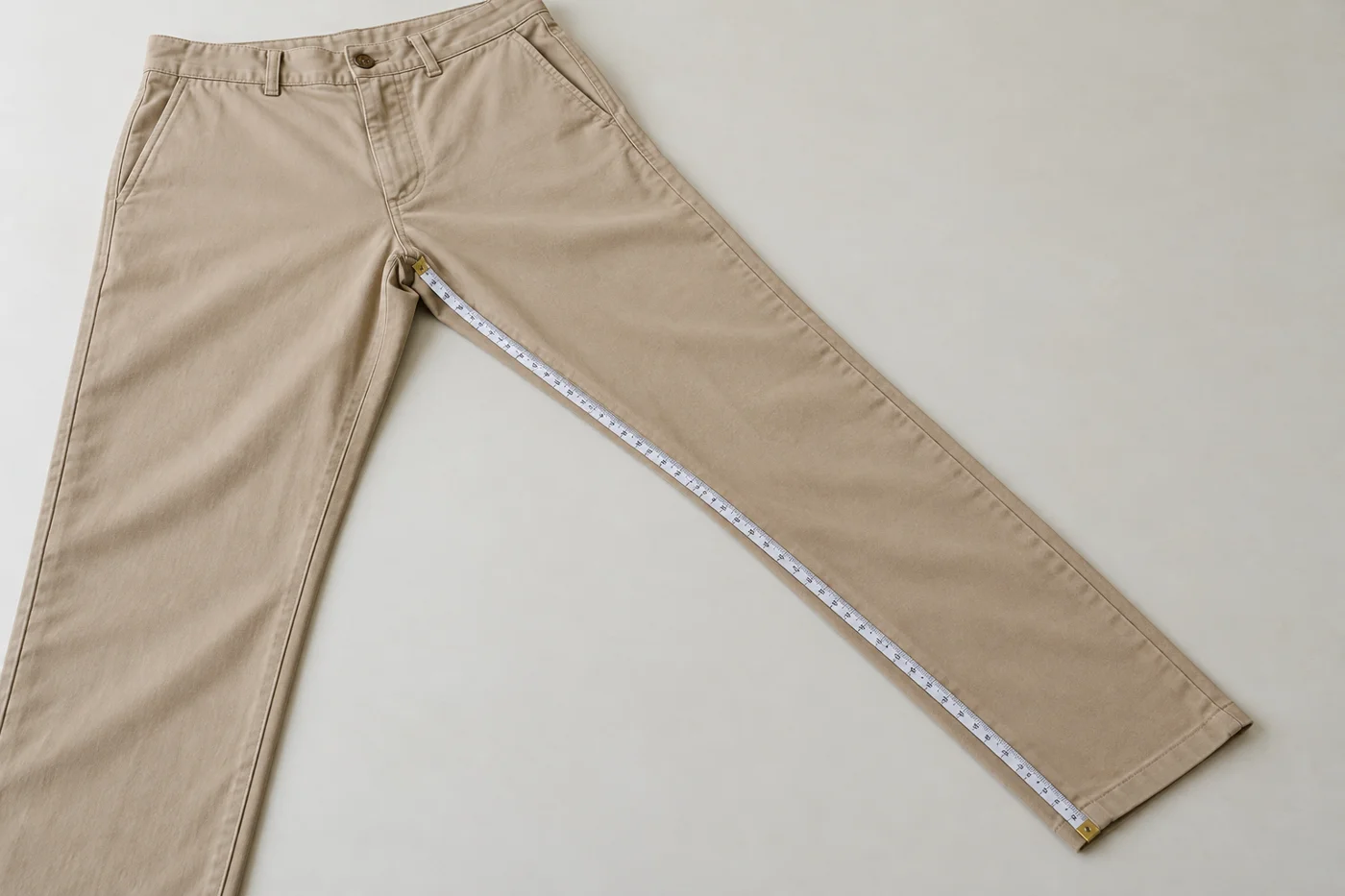
Fasten the trousers and lay them flat without stretching. Measure the inseam along the inner seam from the crotch junction to the hem. For the front rise, follow the relevant center-front seam to the top of the waistband if that is the seller's method. Note whether the waistband is included, because different descriptions may measure differently.
Back rise and crotch shape matter too. Two trousers with the same front-rise number can fit differently at the seat. A numerical comparison helps identify a likely mismatch but does not replace a try-on.
Test sitting before deciding on the hem
Sit in a chair, stand, and take a few steps. Check for pulling at the front, a waistband that drops or digs in, and fabric that gathers awkwardly under the seat. These issues can arise from several aspects of the cut; changing the hem length will not resolve them.
Only judge the final trouser length once the waistband is sitting where you intend to wear it. Moving it higher or lower changes the apparent hem position. Try the shoes you expect to use and consider whether a simple shortening adjustment is enough.
When a pair fits comfortably through the waist, rise, and seat but is slightly long, alteration may be straightforward depending on the hem construction. When those upper proportions are wrong, a different pattern is often a more useful starting point than hoping the inseam measurement will make the rest work.