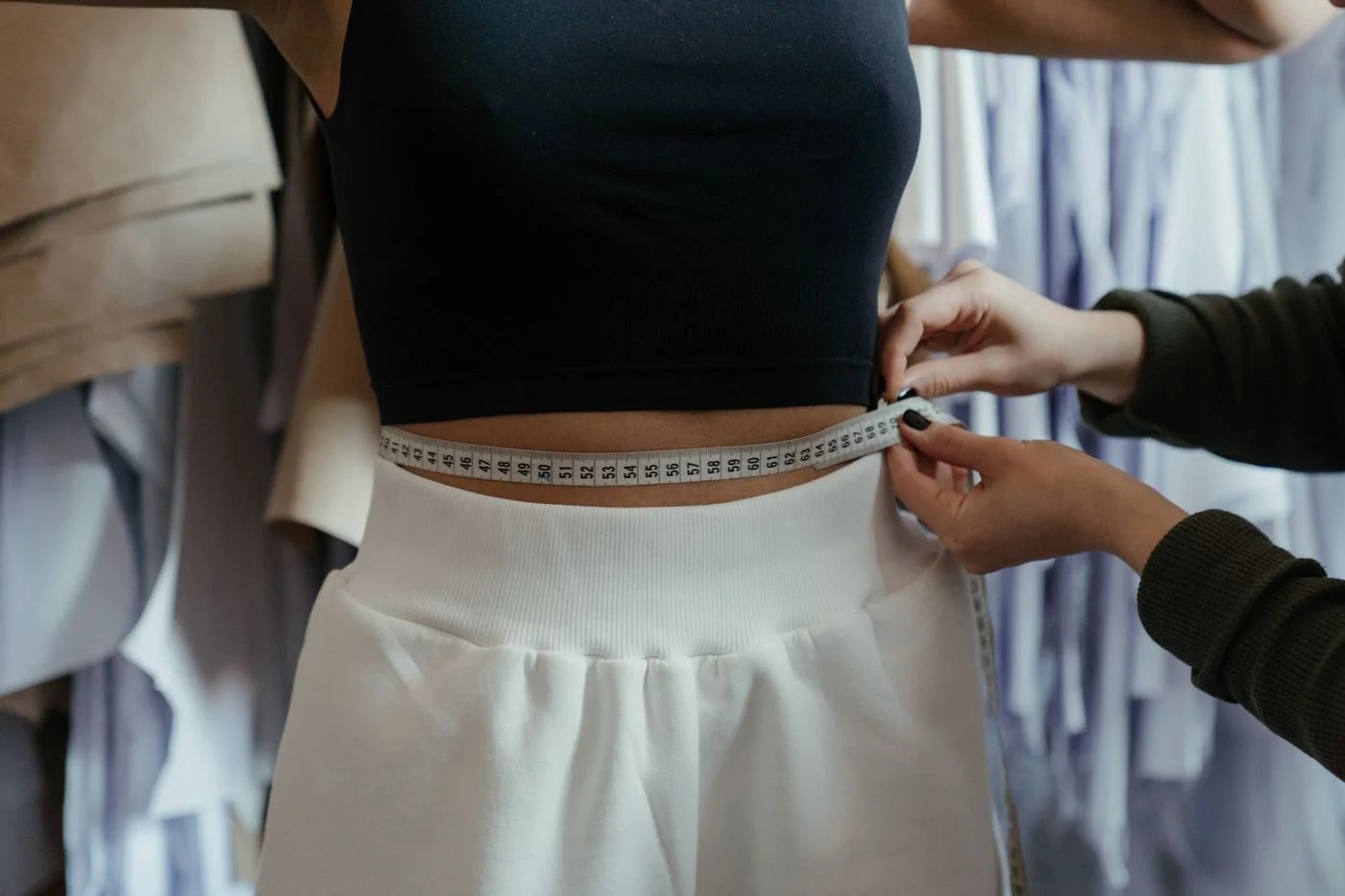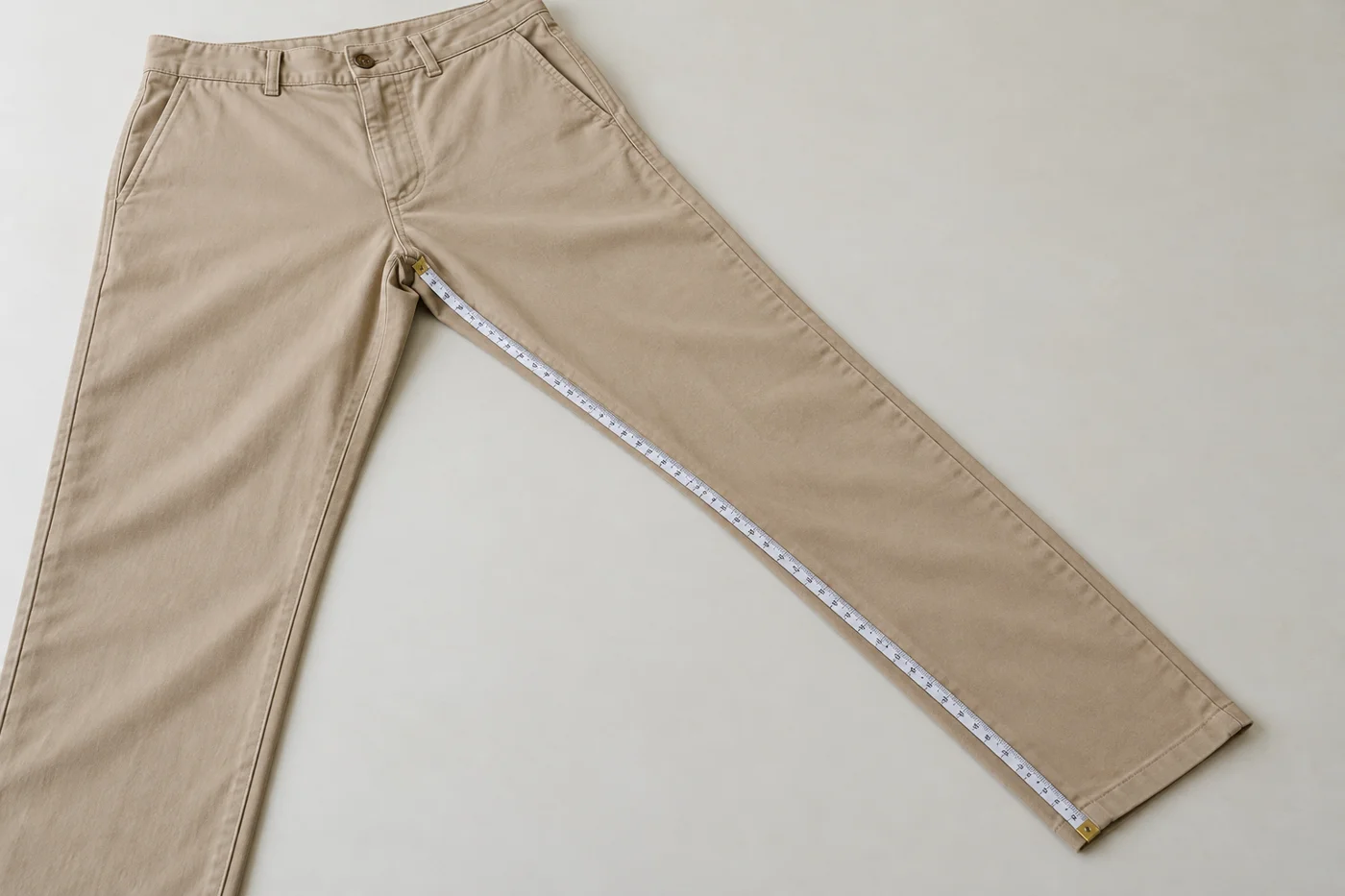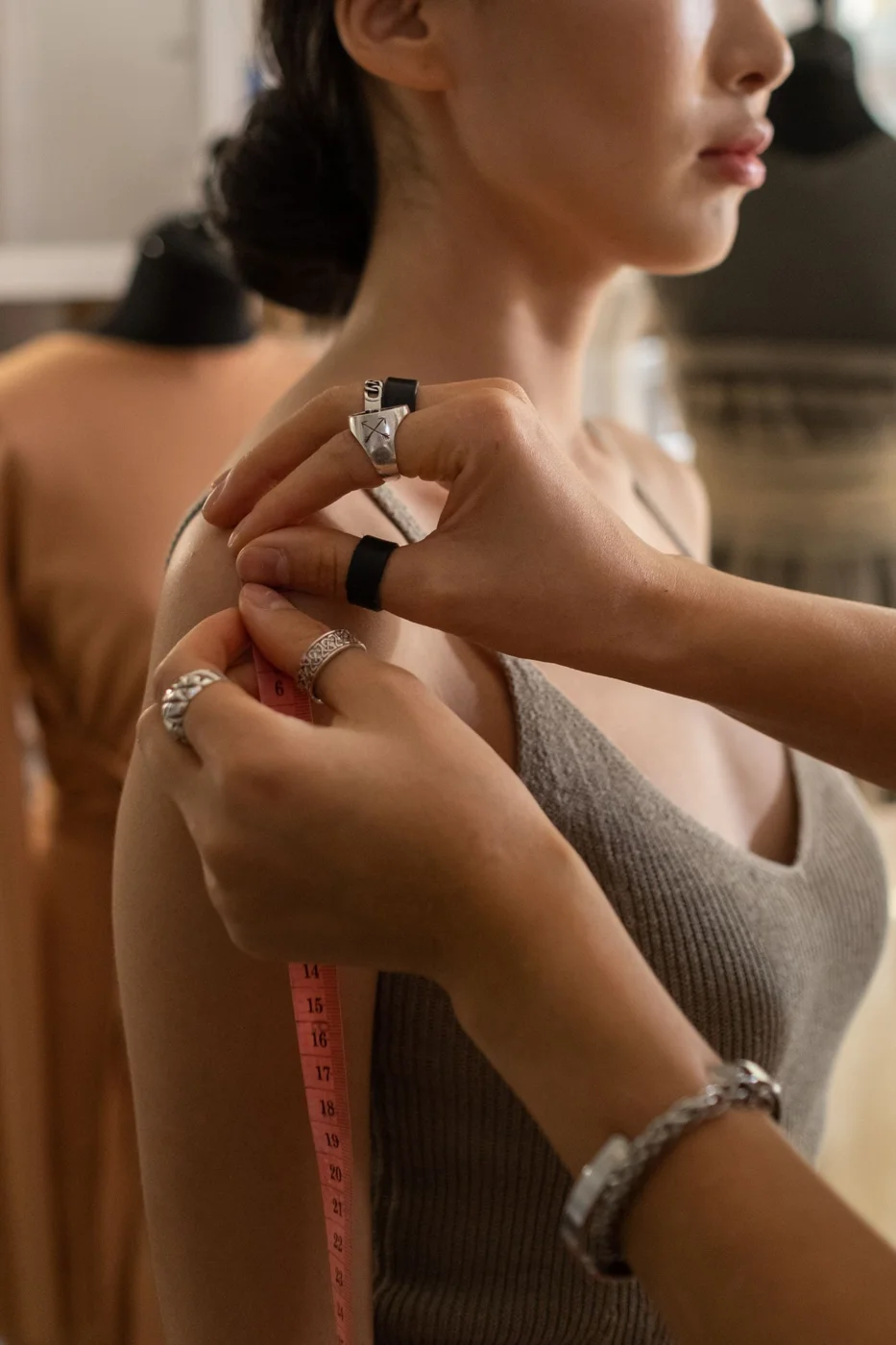
A chart showing a 38-inch chest could mean the body measurement a size is intended to fit, or the circumference of the finished garment. Those interpretations lead to different choices. Before comparing any number, find the chart heading and measurement instructions.
Body charts describe the wearer. Garment charts describe the item, often laid flat. A finished garment normally includes some relationship to the intended body size: extra room for a loose woven shirt, a closer relationship for a fitted piece, or stretch-dependent fit in some knits. That relationship is part of the design, not a universal amount you can add to every purchase.
Flat width is not a circumference
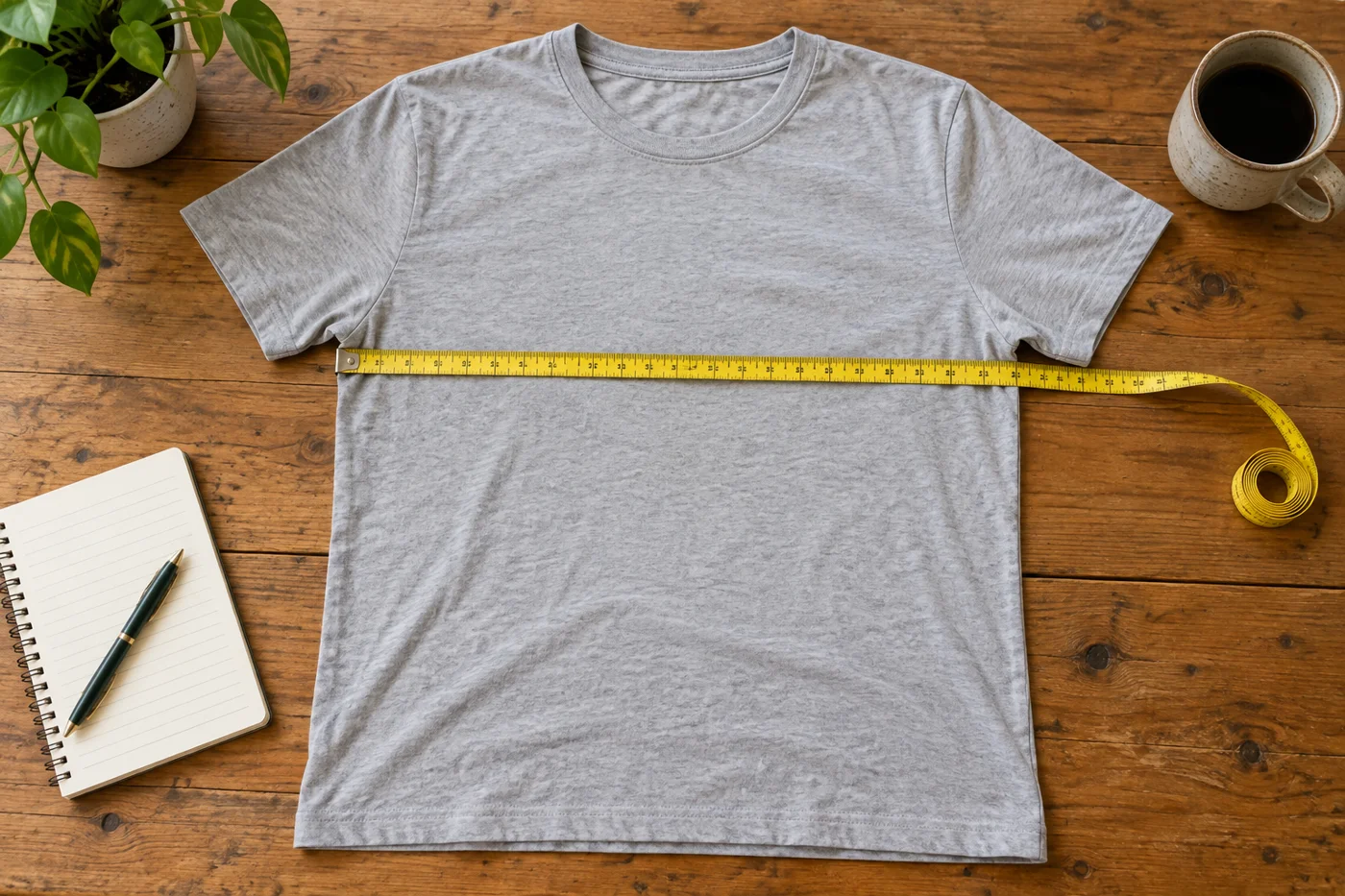
If a shirt measures 21 inches across the chest when laid flat, doubling it gives an approximate 42-inch circumference at that measurement line. That does not mean it is necessarily designed for a person with a 42-inch chest. The garment may need room for breathing, movement, and the intended silhouette.
The doubling shortcut also has limits. Gathers, pleats, elastic, curved shaping, and asymmetric construction can make a single flat measurement incomplete. Use the seller's method and compare with a similar garment rather than treating one width as a complete fit model.
Compare like with like
To use garment measurements, lay out a piece you own that fits in the way you want. Choose a similar fabric and cut where possible. A loose sweatshirt is not a useful chest-width reference for a fitted woven shirt because the design and stretch differ.
Measure from the same landmarks. If the listing measures chest width just below the armholes, do the same. If length is measured from the high shoulder point, measuring your reference from the center back creates a misleading difference. Record the method alongside the number so you can reuse it accurately.
Understand movement room
Extra cloth is not automatically a sizing mistake. A shirt may be designed to hang away from the body, and a coat needs space for the layers worn underneath. Conversely, stretching a close-fitting garment to match a body circumference does not establish that it will be comfortable or opaque.
Try the garment in motion when it arrives. Sit, reach, bend, and use the closures without forcing them. Numbers can narrow the search, but they do not describe every seam, fabric behavior, or proportion.
If a retailer labels its chart only size guide and the meaning remains unclear, ask whether the numbers are body or finished-garment measurements. Resolving that single question can prevent an entire order based on the wrong interpretation.