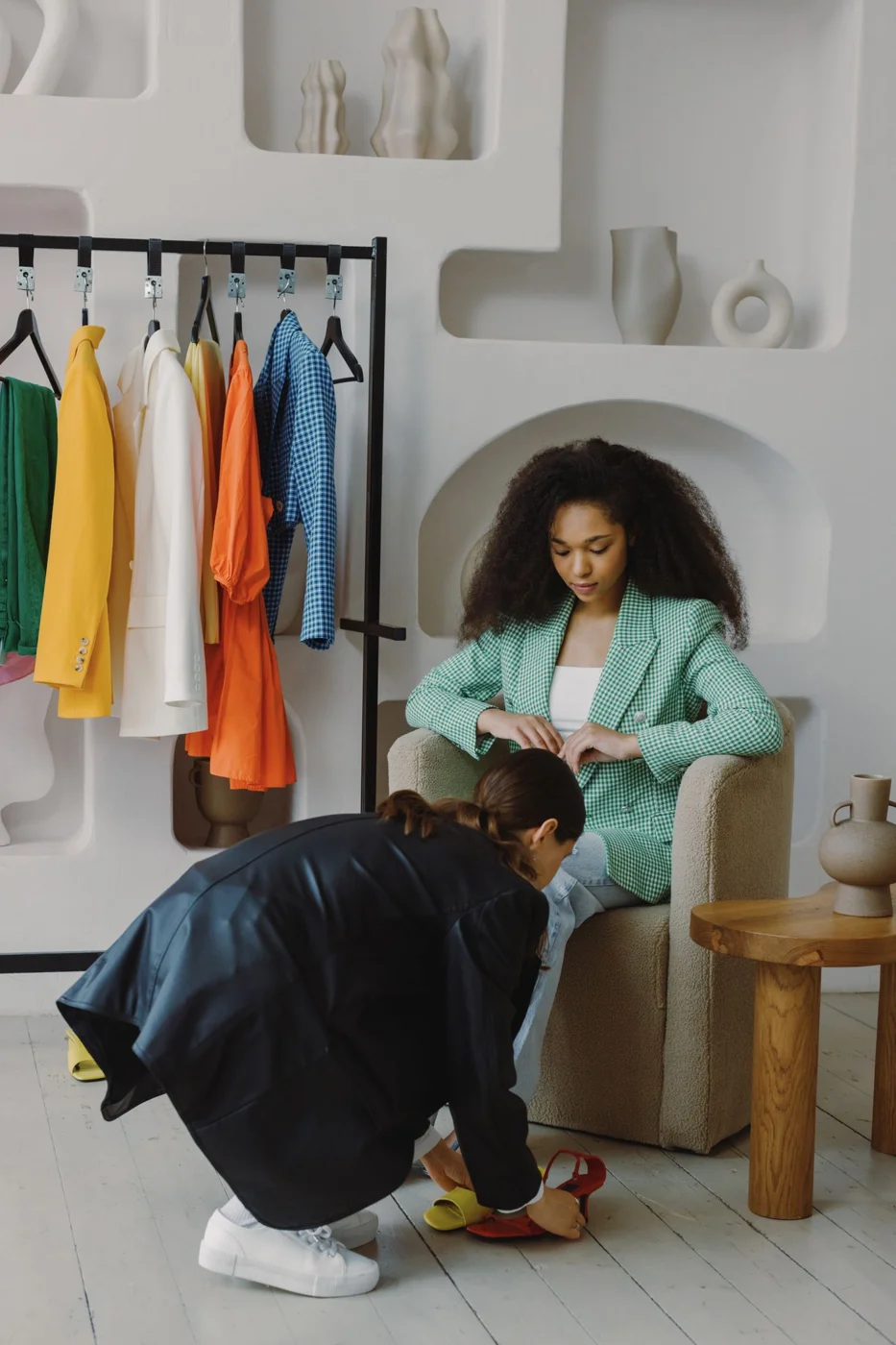
When two shoe sizes arrive at home, the larger one can feel pleasantly roomy at first and the smaller one reassuringly secure. Neither first impression settles the decision. A controlled comparison helps separate useful room from excess movement and a close fit from actual pressure.
Read the return conditions before opening the test into a full day of wear. Keep boxes, tags, and protective packaging together. Use a clean indoor surface that will not mark the soles, and avoid bending or handling the shoes beyond what is necessary for a normal fitting.
Change one variable at a time
Wear the same socks for both sizes and use the same lacing method. If the shoe has a strap, adjust it to a comfortably secure position rather than forcing both sizes to the same hole. The aim is to compare their best reasonable fit, not identical hardware settings.
Try both feet in one size, then both in the other. Comparing a smaller left shoe with a larger right shoe can be misleading because your feet may differ. If you do use a side-by-side check, reverse the comparison afterward so the foot difference does not decide the result.
Stand, walk a short route, turn, and stop. Repeat that route in the other pair. Notice toe pressure, rubbing at the heel, movement over the footbed, and how the upper bends. Write a brief note before switching so the most recent sensation does not erase the earlier one.
Describe the problem precisely
Instead of writing too small, note where: toes touching the end, pressure on the outside of the forefoot, or the top pressing on the instep. Instead of too big, describe heel lift, forward sliding, or loose folds in the upper. A length change may not solve all of those problems.
If the smaller pair crowds the front and the larger one slips at the heel, consider a different width or model. You do not have to choose the less uncomfortable of two unsuitable options. Adding pads or thicker socks should be part of a deliberate fitting plan, not an automatic rescue after the purchase.
Check the shoes with the trousers or outfit you intend to wear once fit seems promising. This prevents a purely visual preference from deciding the size before the foot fit is assessed. A slightly different silhouette is less important than walking comfortably and naturally.
Make the decision while it remains reversible
A short indoor test cannot guarantee how the shoes will feel after hours outside, but it can reveal problems already present. Do not ignore pain or obvious pressure because you expect a break-in period to correct the underlying dimensions.
Return the unsuitable pair within the actual deadline and keep a note of the model, size, width, and the result. If neither works, record that too. The purpose of ordering two sizes is to gain information, not to create an obligation to keep one.