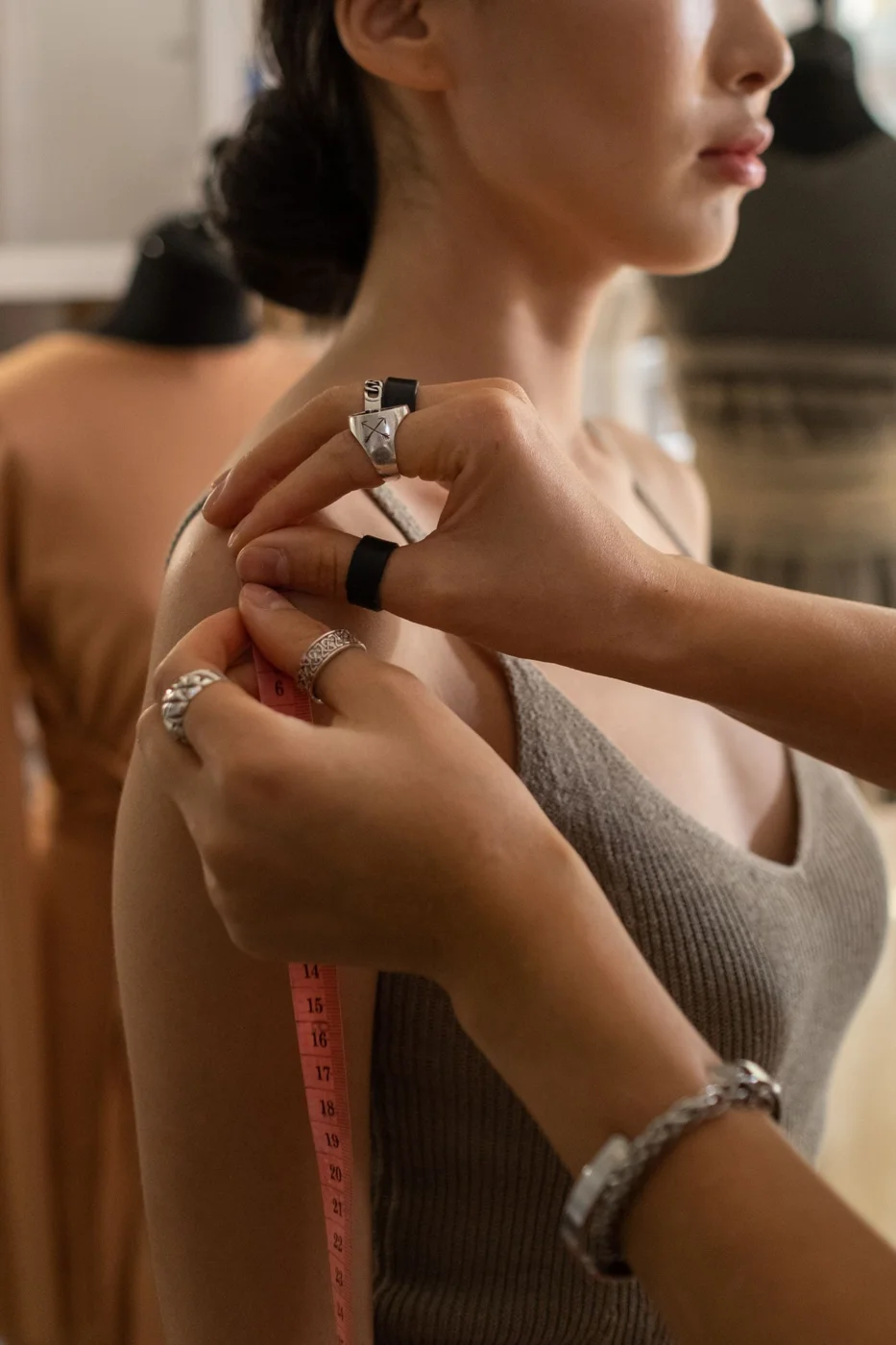
The most useful fit reference may already be in your wardrobe. A shirt you reach for every week or trousers that sit comfortably can tell you more about your preferences than a size label alone. To use that reference well, measure the garment in a repeatable way and note why you like it.
Choose a piece that resembles the purchase you are considering. A stretchy legging is a poor width reference for rigid trousers; an oversized sweatshirt cannot establish the fit of a tailored jacket. Similar fabric behavior and intended silhouette make the numbers more meaningful.
Prepare the garment before measuring
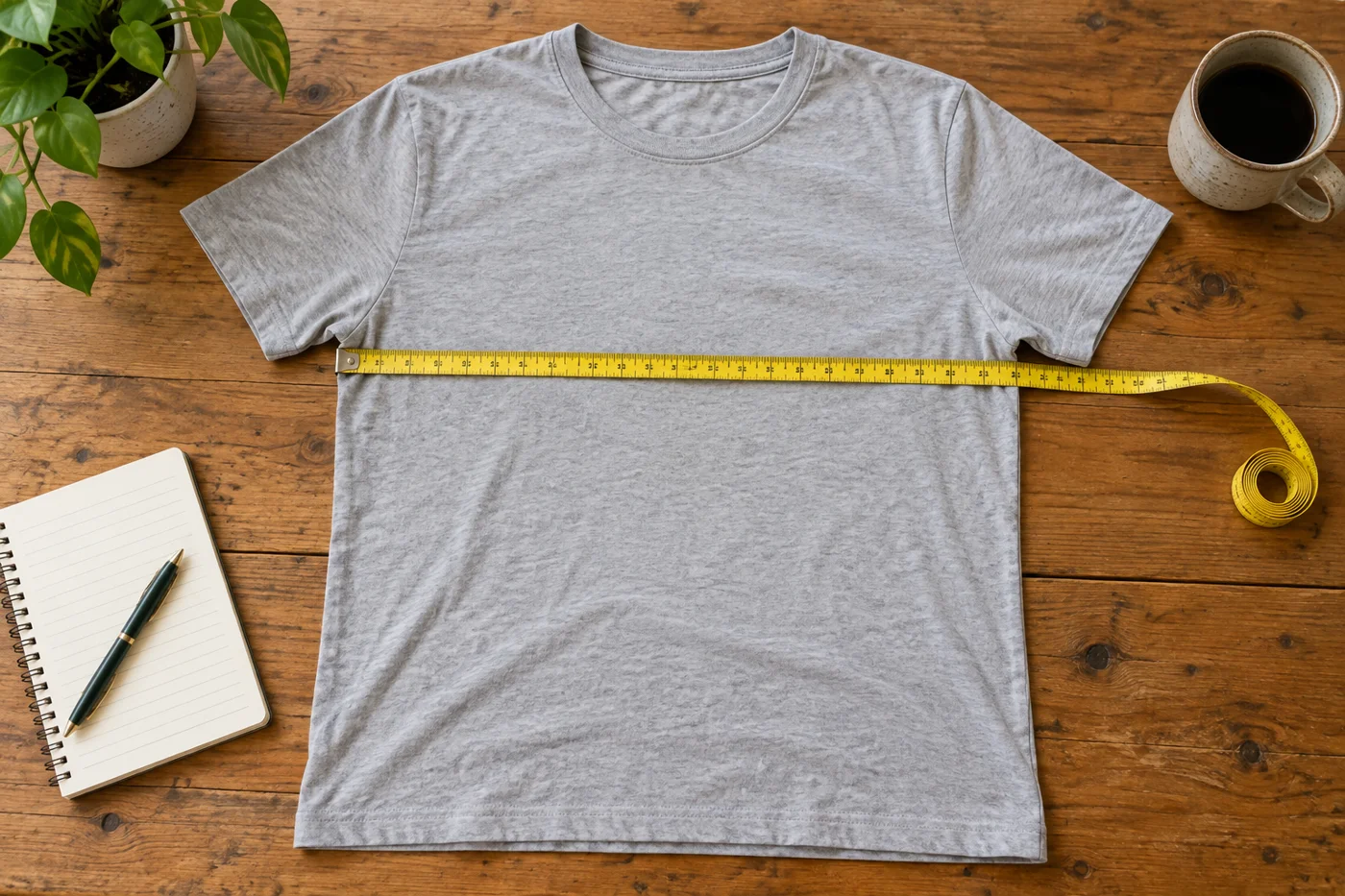
Use a clean, dry item in its normal wearing condition. Fasten closures and lay it on a flat surface. Smooth folds without stretching the material or forcing a curved seam into a straight line. If the garment has changed with wear, that is part of the reference: you are measuring the fit you actually use.
Record the points, not just the results. Chest width measured just below the armholes, length from the high shoulder point, and inseam along the inner leg seam are all more useful than an unexplained list of numbers. Match the retailer's method whenever it is provided.
Include the imperfection you want to change
A favorite garment does not have to be perfect. Note whether you would prefer a slightly longer sleeve, more room at the thigh, or a shorter body. Keep those preferences separate from the actual measurements so you do not later forget which numbers were observed and which were desired.
For example, you might record a trouser inseam and then add that the hem would be better a little shorter with your usual shoes. This is clearer than silently changing the reference number and assuming the garment itself measured that way.
Compare within a sensible tolerance
Home measurements are approximate, and garment production can vary. A tiny difference on a chart may not matter as much as a different rise, armhole, or fabric. Avoid treating every fraction of an inch as equally decisive when the overall construction is unlike your reference.
Keep the note with a photograph of the garment laid flat and a short description of its fit. Over time, you may build a few references for different categories rather than trying to make one shirt represent your whole wardrobe. The purpose is to ask better questions before buying, not to replace trying the new garment on.