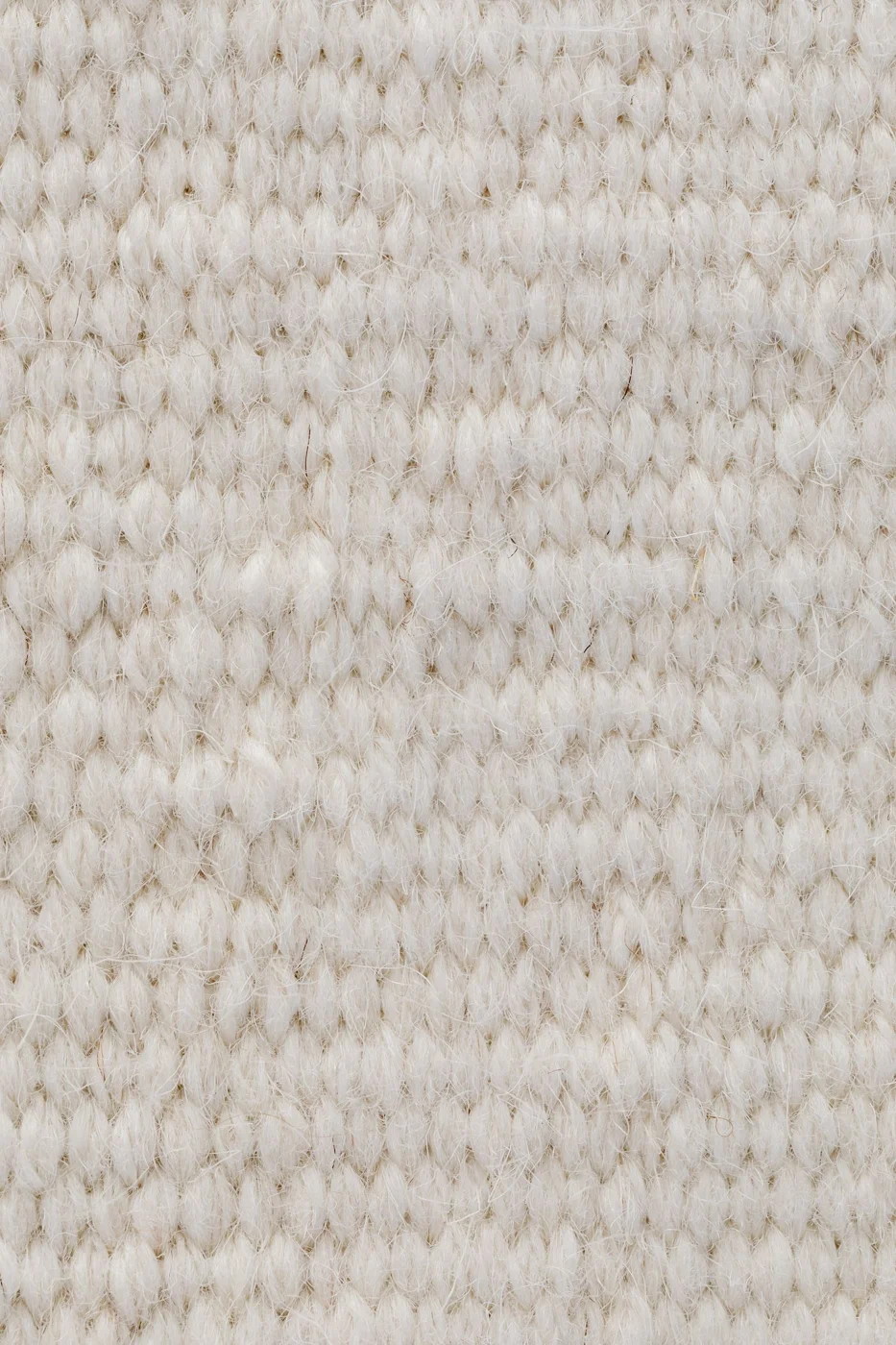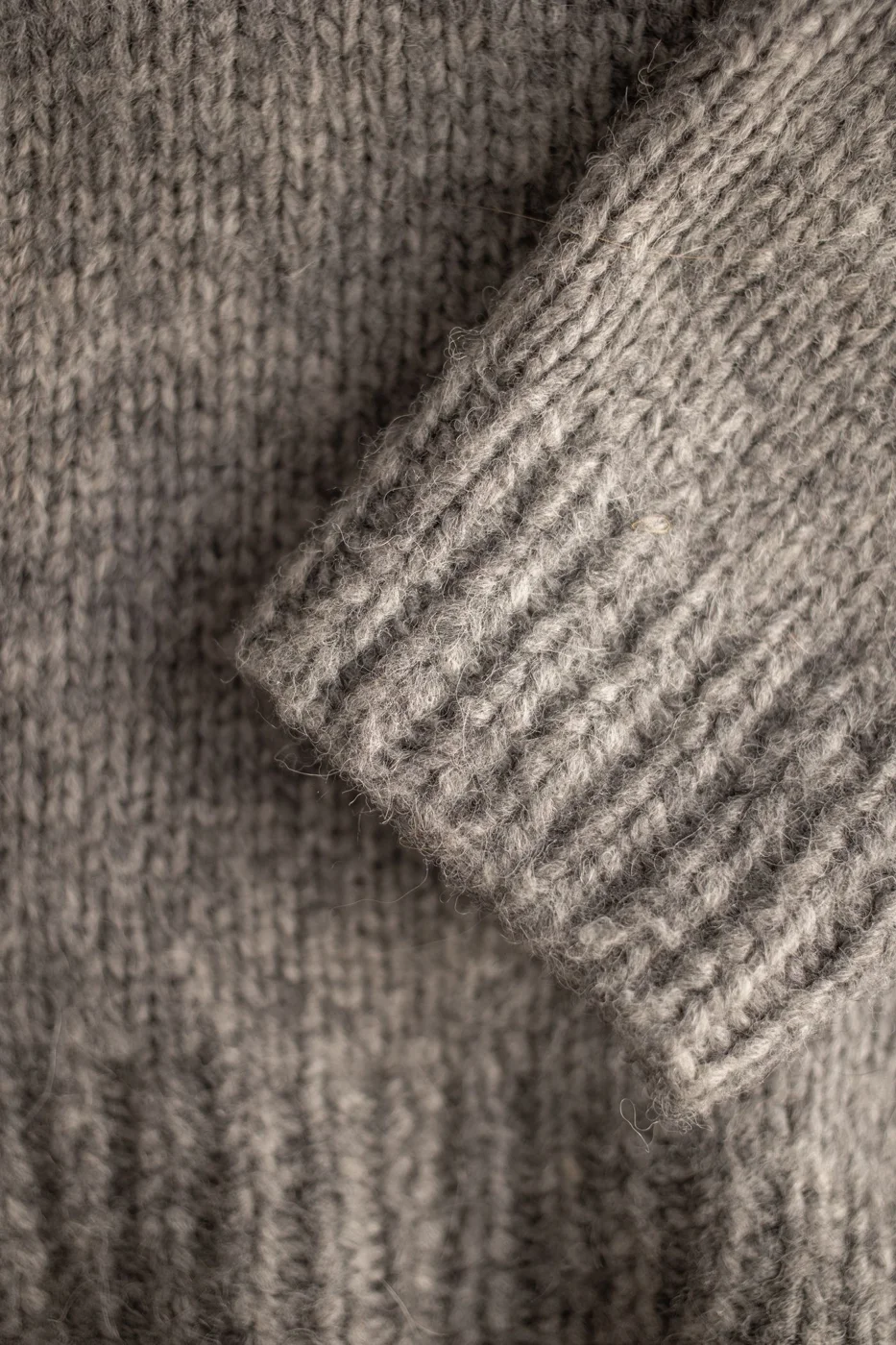
A wool sweater can look substantial while feeling surprisingly open in the hand. Another can be fine and compact, with little visible space between stitches. Knit density, yarn, shape, and finishing all influence the experience; thickness alone is not a quality ranking.
Hold the garment gently in good light. Look at the stitch pattern without stretching it hard. An intentionally open knit is not a defect, but it may need a layer beneath it and may catch on objects more readily than a smoother surface in your routine.
Feel where the sweater touches
The neckline, cuffs, and inner seams are worth more attention than a quick stroke across the front. Try the sweater over the layer you intend to wear, where store rules permit. If you expect to wear it against your neck, a comfortable feel over a thick shirt does not answer that question.
Different people prefer different textures. There is no need to persuade yourself that an unpleasant sensation proves authenticity or superior quality. Equally, a soft touch does not establish how the sweater will wear over months.
Look at the shoulder and underarm seams. They should allow the movement the design requires without pulling open. A dense knit in a restrictive cut may be less comfortable than a lighter knit with appropriate room.
Weight and shape together
Lift the sweater and notice where its weight is concentrated. Heavy sleeves can pull at shoulders, while a wide body may hang differently once worn. Check the hem and cuffs after a gentle try-on rather than assuming they will stay exactly as arranged on a hanger.
If you plan to wear a bag over it, consider where straps will rub. That does not make the sweater unsuitable, but it helps you choose between a delicate surface for occasional wear and a construction that feels more appropriate for your everyday routine. No quick inspection can guarantee that a knit will never pill.
Read the care label before deciding that a wool sweater fits your schedule. Storage and drying arrangements can matter as much as washing. Woolmark recommends folding knitted wool garments rather than leaving them hanging; the particular garment's care directions should guide the rest.
Choose the sweater whose density, surface, and shape work together for you. A fine knit can be a considered purchase, and a thick one can be comfortable, but neither earns those qualities from bulk alone.