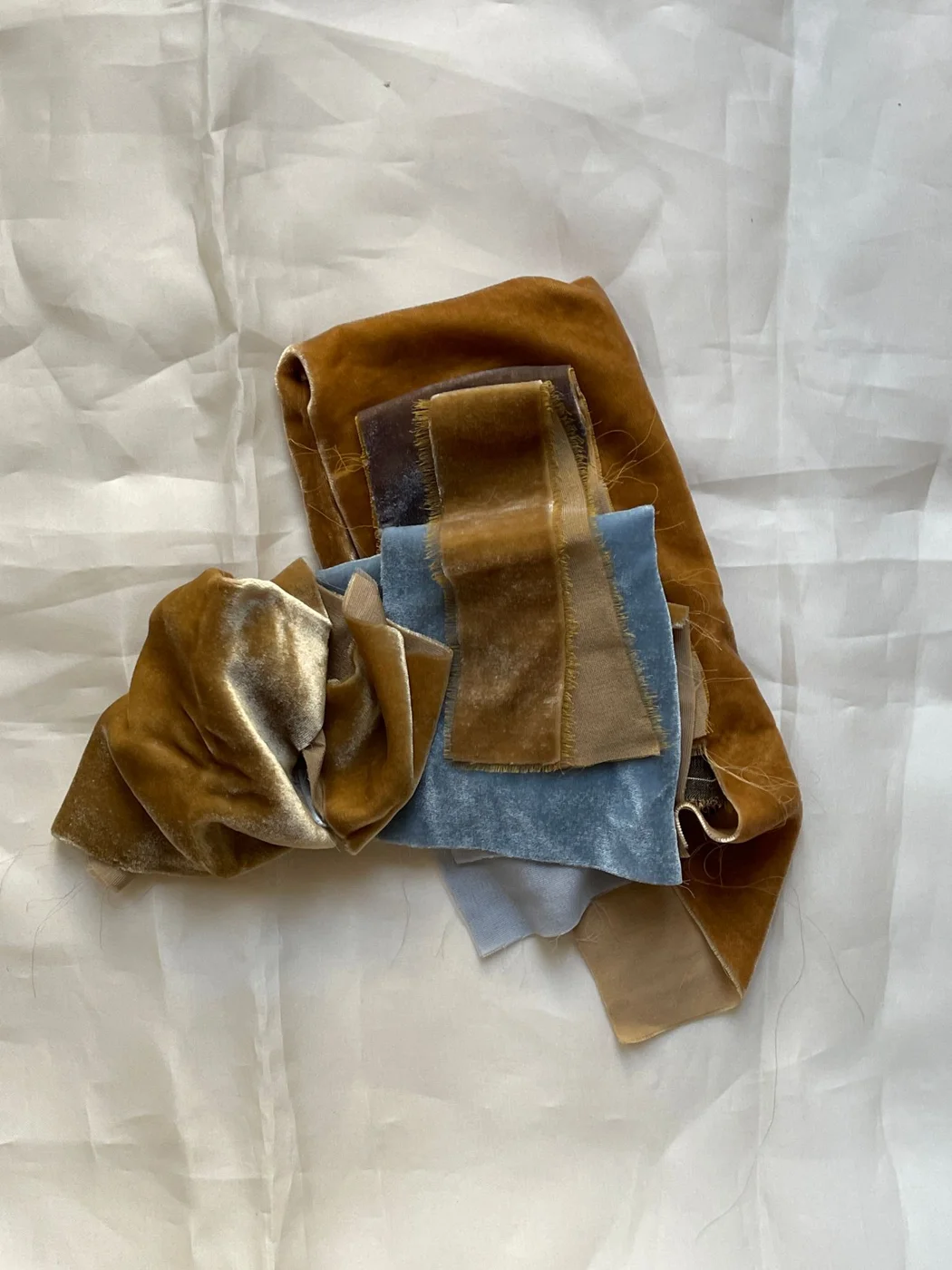
Velvet reflects light through a raised surface, which is why a sleeve can look lighter or darker when turned. A change in shade is not always a stain. Before attempting any treatment, inspect the area in different light and compare the direction of the surface.
The fiber content can vary, and so can the construction and care requirements. A stretch velvet top, a structured jacket, and a delicate occasion dress should not be treated as one interchangeable material.
Consider what will press against it
A shoulder bag, tight belt, chair edge, or heavy coat can create repeated contact. That does not rule out velvet for everyday use, but it helps you select the garment and accessories sensibly. A loose top under a rough bag strap may behave differently from a skirt worn for a seated event.
During a try-on, examine how the surface changes after sitting or bending. Avoid deliberately crushing or rubbing a new garment to test it. Look for whether you like the normal variation rather than expecting an absolutely uniform appearance in every position.
For secondhand velvet, request images from more than one angle. A seller's single bright photograph can hide or exaggerate pressure marks. Ask specifically about flattened areas, worn pile, and any attempted treatment.
Do not reach immediately for an iron
Direct pressure and heat can affect some velvet surfaces. Follow the garment's care instructions and seek material-specific advice if a mark remains. Do not assume that steaming, brushing, or washing is safe simply because it worked on another velvet item.
The back of the fabric and its lining matter too. A stiff lining can limit movement even when the face feels soft. Check seams and closures, particularly around a fitted waist or underarm.
Store without unnecessary pressure
Give the garment enough room that other items are not tightly compressed against it. Use the storage method appropriate to its construction: a heavy knit and a tailored jacket may need different support. Avoid leaving clips or sharp folds in prominent areas unless the maker's guidance permits that arrangement.
Before buying, decide whether you enjoy the surface's changing light and texture. If every variation will feel like damage to you, velvet may be frustrating for a frequently worn piece. If you like that depth, choose a cut and care routine that let you use it without constant concern about keeping it photographically perfect.