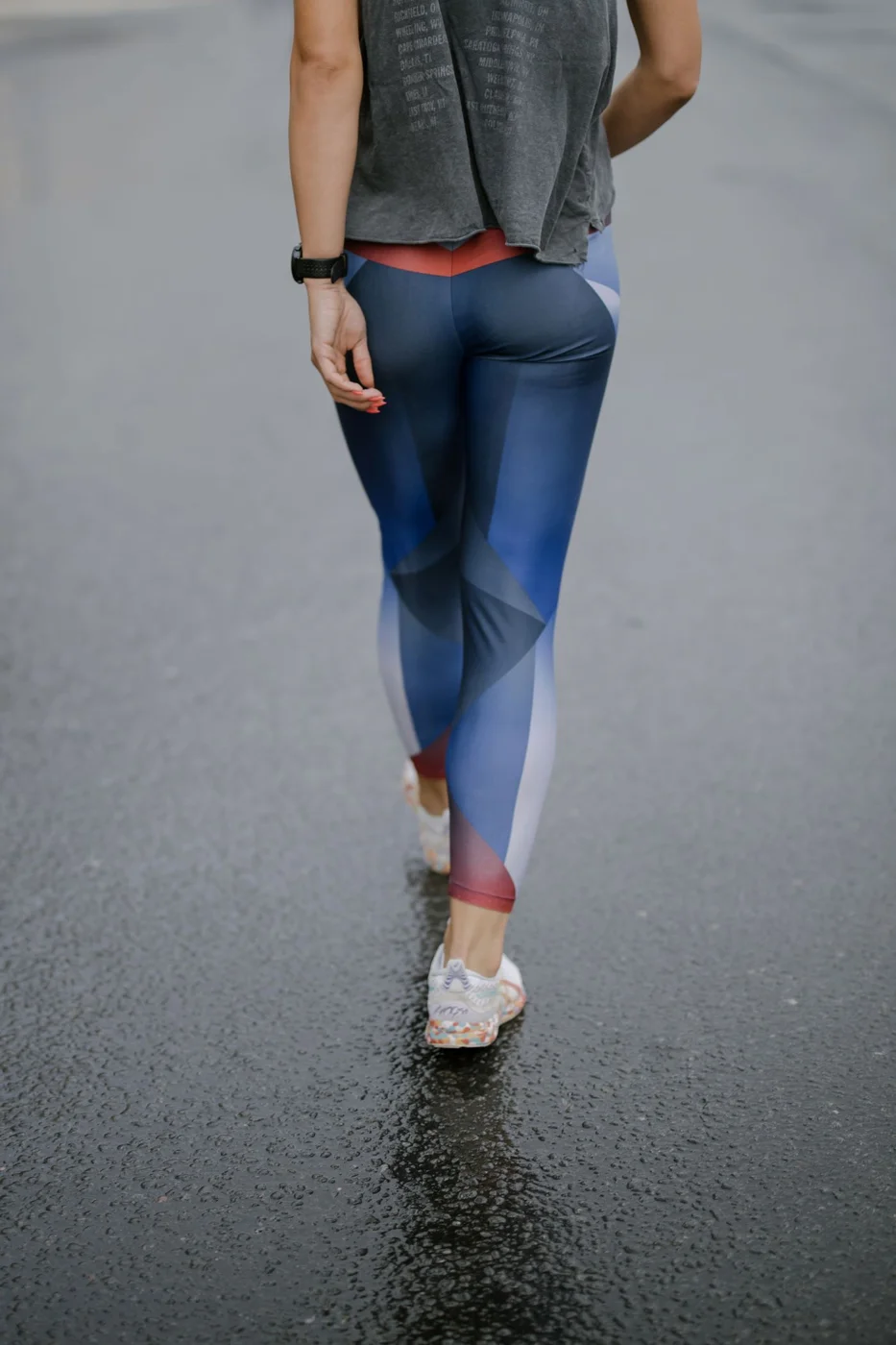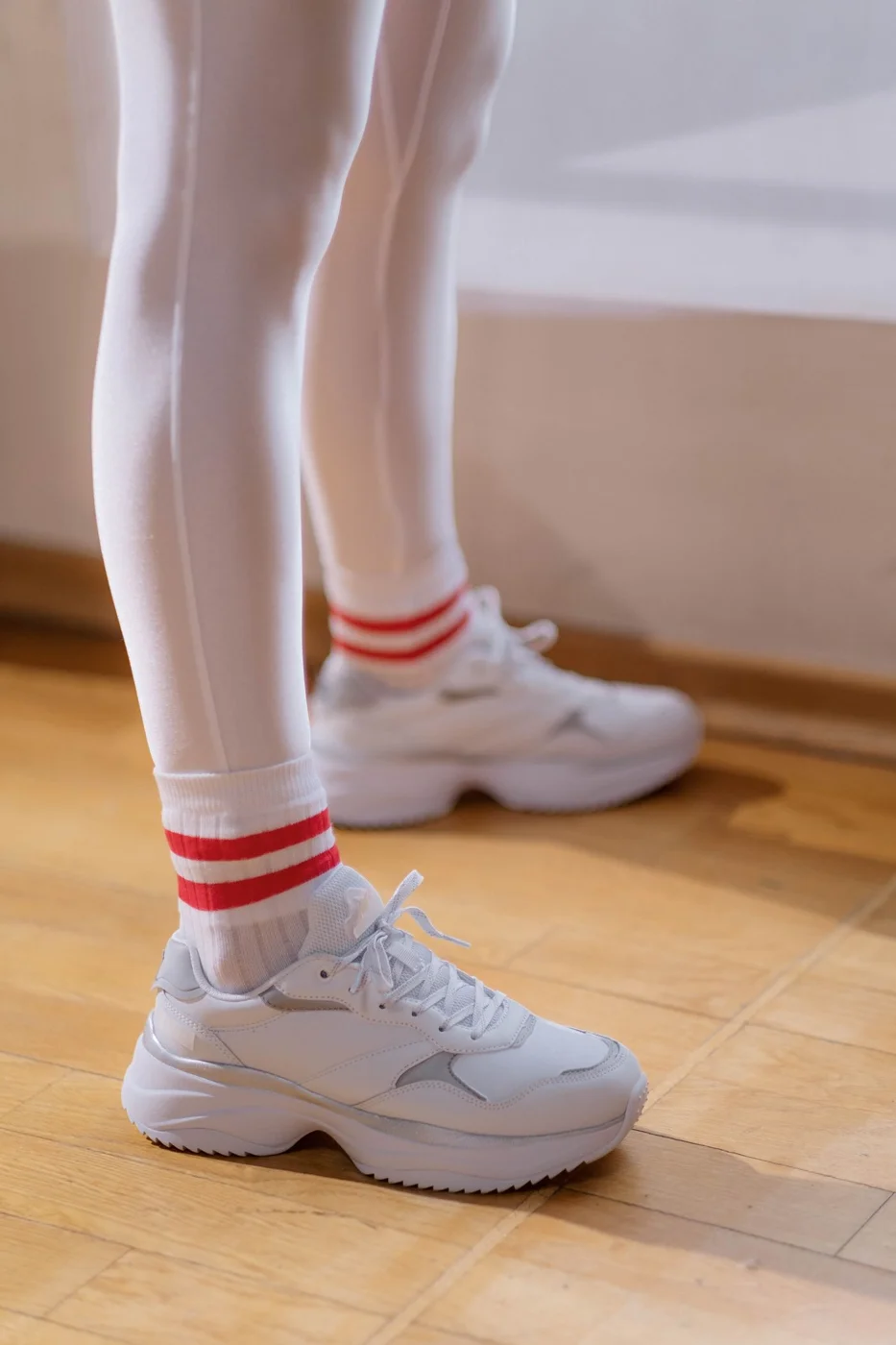
The opacity of tights is not determined by a single number alone. Denier is useful product information, but color, knit, fit, and how far the fabric stretches also influence what you see. Compare the exact pair in the conditions in which you intend to wear it.
Use the maker's size chart rather than automatically choosing your usual clothing size. Tights often use height and weight ranges or another combination of measurements. If you are near a boundary, follow the specific guidance instead of assuming every brand grades its products the same way.
Start at the waistband
During a permitted try-on, sit and bend gently. The waistband should rest where intended without painfully digging or repeatedly rolling. A high waist can feel secure to one person and crowded to another. The label does not decide whether the position works with your torso or the skirt you plan to wear.
Check that the crotch reaches its natural position without excessive pulling. If there is not enough length, tension may be distributed unevenly through the legs. If there is too much, folds can collect at the ankles or knees. A different size or proportion may be more useful than simply pulling harder.
Consider the surfaces around them
Inspect shoes and garment fastenings for rough edges that could catch the knit. Jewelry, broken nails, and hook-and-loop closures are worth noticing while dressing. A pair of tights can be damaged by the things around it, so a stronger-looking fabric is not a promise that it cannot snag.
Look at the color against your outfit in good light. Dark tights may appear more transparent across the knee than at the ankle, and a colored pair can shift in tone as it stretches. Judge the worn appearance rather than the folded sample on a package.
Before buying several, read the care and hygiene-related return conditions. A multipack is most useful after you know the fit. Choose for the coverage, waistband comfort, and finish you need, while accepting that delicate knitwear requires some care in handling. Paying more does not remove the need to protect it from sharp or rough surfaces.