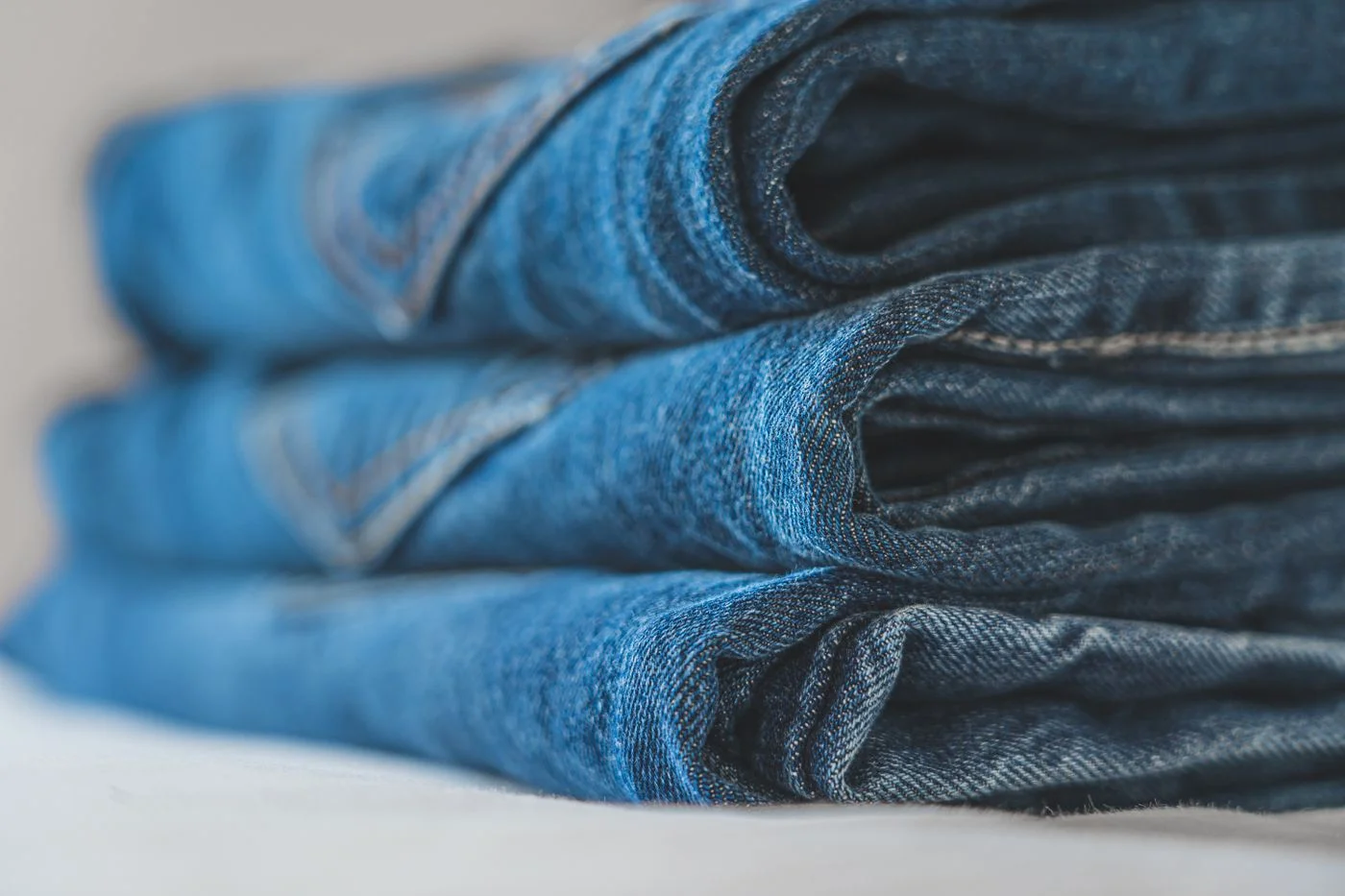
A straight-leg label tells you something about the line of the jeans, but very little about where their hem will land on your shoes. One pair can skim a low sneaker; another can catch on its tongue. Before searching for a new shoe to solve the outfit, put the jeans next to the footwear you already reach for most often.
Choose two useful reference pairs: perhaps a low sneaker for errands and an ankle boot for cooler days. The aim is not to make the denim work with every shoe in the closet. It is to establish whether the combination you will actually wear feels finished and lets you walk normally.
The hem has two dimensions
Inseam controls length, while the opening determines how the fabric meets the shoe. A narrower straight leg may rest on a bulky sneaker instead of falling around it. A wider one may cover much of a slim flat. Neither effect is automatically wrong, but product photographs often hide it by using a carefully chosen shoe or a model with a different leg length.
Measure a favorite pair flat from the crotch seam to the bottom, then across the hem. Use those figures as a comparison rather than a universal size formula. Two jeans with the same inseam can sit differently if the rise changes where the waistband rests.
Try the outfit in motion
Walk toward a mirror, turn, and sit down. Watch for a hem that slips beneath your heel or repeatedly wedges into a boot shaft. A small break at the front may be a style preference; stepping on the back is a functional problem. With boots, check what happens when the trouser leg rises as you sit and whether it falls back into place afterward.
If you intend to cuff the jeans, fold both legs to the intended depth. A heavy double cuff can change the way the opening hangs, and its contrasting underside may become the strongest detail in the outfit. Do not assume a cuff is an invisible length adjustment.
Shortening can be worthwhile when the rest of the jeans fits well, but ask how the original hem and leg shape would change before committing. Keep tags attached until that decision is made. A pair that needs alterations and new shoes has a different total cost from one that works with the footwear waiting by your door.