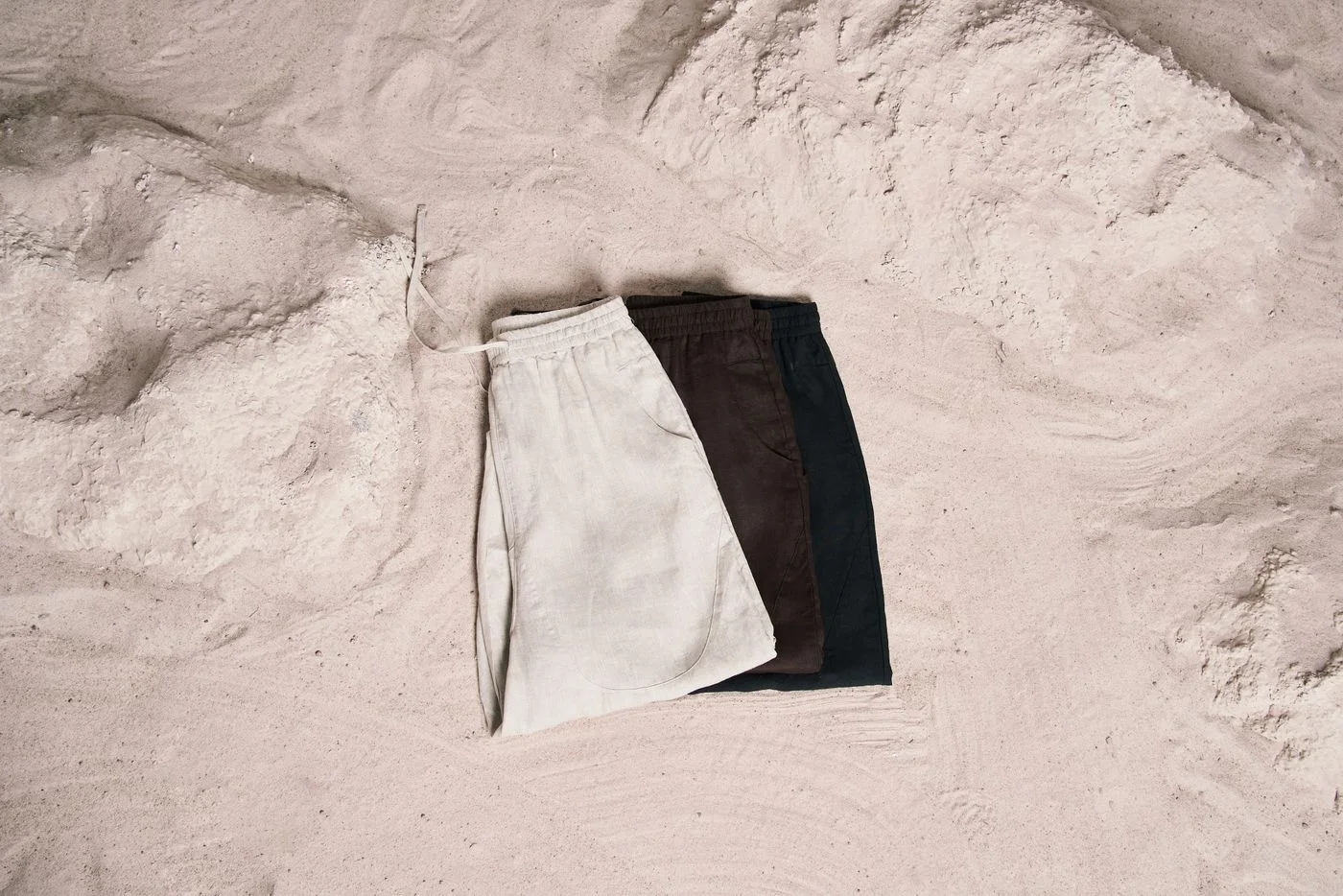
Wide legs can make trousers look relaxed even when the upper section is anything but roomy. If the waistband sits at the wrong point or the rise pulls when you sit, extra fabric below the hip will not solve the problem. Start the fitting process above the knee.
The rise is commonly measured from the crotch seam to the top of the waistband, but retailers may report front and back measurements differently. A description such as high rise is a category, not a promise about where the waist will land on your body. Ask for the actual garment measurement when an online listing provides only a style label.
Settle the waistband first
Put the trousers where they naturally sit without pulling them upward to imitate the photograph. Fasten them, take a normal breath, and check the waistband from the side. If it cuts into your waist while the seat hangs low, sizing up may create a larger version of the same mismatch. A different rise or curved waistband may be a more useful comparison.
Pleats deserve a separate look. They can open as you move, but if they are pulled apart while you stand neutrally, the upper portion may lack the room you want. Pockets that flare outward can provide another clue. These are observations to compare across sizes, not rules about how every wide-leg silhouette must look.
Sit in an ordinary chair rather than simply bending your knees. Notice pressure at the waistband and the seam beneath you. Then stand without arranging the garment. Does the front settle again, or does fabric remain gathered across the lap? Check the back in a second mirror if available.
Length follows the intended shoes
Once the rise works, evaluate the hem in your usual footwear. Moving a waistband higher to lift a dragging hem also changes the fit through the torso. It is not a substitute for the correct length. If you expect to alternate between flats and heels, decide which pair matters most rather than forcing one inseam to suit very different heights.
For an online comparison, lay well-fitting trousers flat and record the waistband width, front rise, back rise, and inseam using the seller's stated method. These numbers explain more than your usual size alone. They also help identify whether a discounted pair needs a straightforward hem or a more complicated change to its basic proportions.