A secondhand listing may give a size label but no useful fit information. The garment could come from an older sizing system, have been altered, or have changed shape through wear and care. Measurements will not remove every uncertainty, but a focused request can tell you much more than asking whether it fits true to size.
Before messaging, measure a similar garment you already own and like. Lay it flat, fasten it as worn, and smooth it without pulling. Write down the measurement points you used. This gives the seller a specific request and gives you a meaningful comparison when the answer arrives.
Ask for the measurement that could change your decision
For trousers, a flat waistband width, front rise, inseam, and thigh width may answer the main questions. Specify where you want the thigh measured because different positions produce different results. For a shirt, chest width below the armholes, shoulder width where relevant, sleeve length, and back length may be more useful.
You do not need every possible dimension. If the sleeves are the only concern, say so. A short message such as asking for the sleeve measurement from the shoulder seam to the cuff is easier to answer than a long questionnaire containing details already visible in the photographs.
Elastic and gathered sections need special care. Ask for an unstretched measurement first and clarify whether any second measurement is gently extended. A maximum pulled width can misrepresent the comfortable wearing range. Likewise, a flat chest measurement is not a body measurement and does not automatically include enough movement room for you.
Make a request easy to reproduce
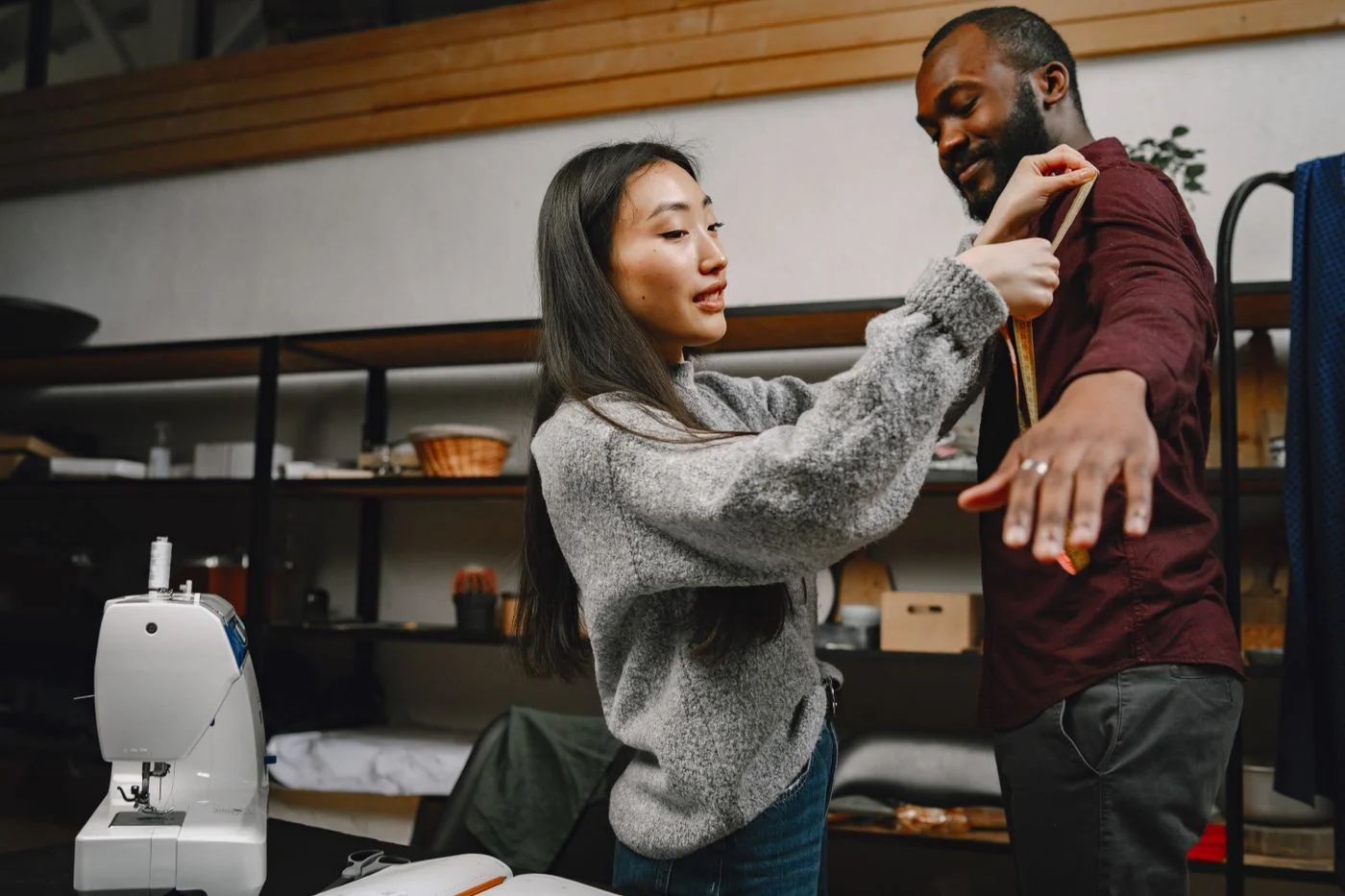
Explain the unit you use and the start and end points. A photograph showing the tape can help when the listing's written measurements seem inconsistent. The tape should lie straight rather than follow every fold or curve unless the chosen measurement specifically requires a curved path.
If you receive an unexpected number, ask one clarifying question before concluding the garment is unsuitable. The seller may have measured the waistband around its full circumference when you asked for a flat width, or measured a raglan sleeve from a different point. Resolve the method, not just the number.
Ask about changes the tape cannot explain
Has the hem been shortened? Has the waist been taken in? Are there visible stretch marks at seams, damaged elastic, or a twisted leg? These details can matter even when the headline measurement looks right. Request a photograph of the relevant area if it is not already shown.
Keep your request courteous and proportional to the purchase. A seller may not have the time or equipment to provide every measurement, and an approximate measurement remains approximate. Their inability to answer is not proof of a problem, but it does leave you with uncertainty.
Compare the reply with your reference garment and the seller's return terms. If a critical measurement remains unknown and returns are limited, decide whether the price justifies that uncertainty. A bargain is less convincing when its fit depends on several guesses arriving in your favor.