A polo shirt combines a soft body with a collar, and the two do not always behave the same way. A neat collar on a hanger may curl, spread, or press against your neck when worn. A fabric that feels substantial in your hand may feel too heavy for the day you have in mind. Evaluate the whole garment, not just its familiar outline.
Start by opening the placket to the position you normally use. Some collars sit naturally with one button undone; others spread widely or collapse toward the chest. Fasten it too if you ever wear it that way. You should not need to choose between uncomfortable closure and an opening you dislike.
The collar has its own construction
Look at the underside and edges. A ribbed collar, a collar made from the body fabric, and a more structured woven collar can each create a different effect. None is automatically the premium choice. Ask which one suits your wardrobe and the amount of maintenance you are willing to do.
Try the polo beneath a jacket. The collar may sit under the lapel, rise against the jacket neck, or fold outward. Move your head and reach forward. A combination that stays comfortable during those movements is more useful than one arranged perfectly for a photograph.
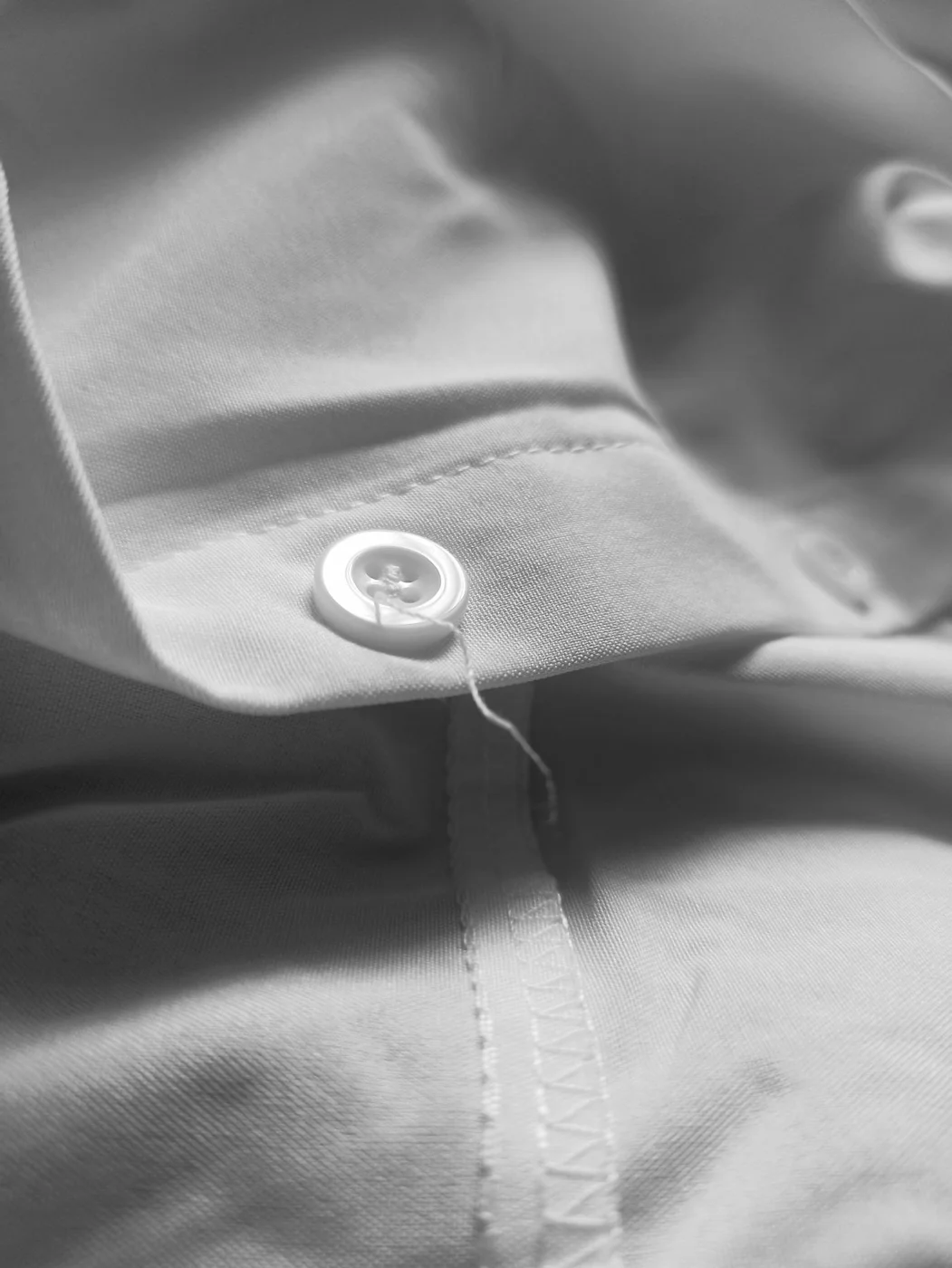
At the placket, inspect the fabric around the buttons. It should lie in the way the design intends without obvious pulling. If the chest feels close and the button area strains, compare another cut or size. A looser waist does not compensate for inadequate room higher up.
Weight and texture change the role
Pique, jersey, and other knitted constructions can feel different even with similar fiber labels. A textured surface may disguise small wrinkles; a smooth surface may emphasize a cleaner line. Hold the fabric lightly rather than assuming its name tells you everything about thickness or opacity.
Try a tucked and untucked arrangement. A long back hem can help coverage when reaching but may look different from the front. Side vents can improve movement while revealing the waistband beneath. Consider those details with your usual trousers or shorts.
The sleeve band deserves a check as well. A narrow ribbed cuff may grip the upper arm while the body remains loose. Bend your arms and raise them gently; decide whether that tension is comfortable. If the band is the limiting point, a different sleeve design may be more useful than extra body width.
For a work rotation, compare the polo with the dress expectations you actually have. For casual wear, think about the shoes and pants you repeat most often. A sale multipack makes sense only after one version has passed the collar, sleeve, and care checks. The useful polo is the one that maintains the appearance you want through ordinary movement, not only while lying flat.