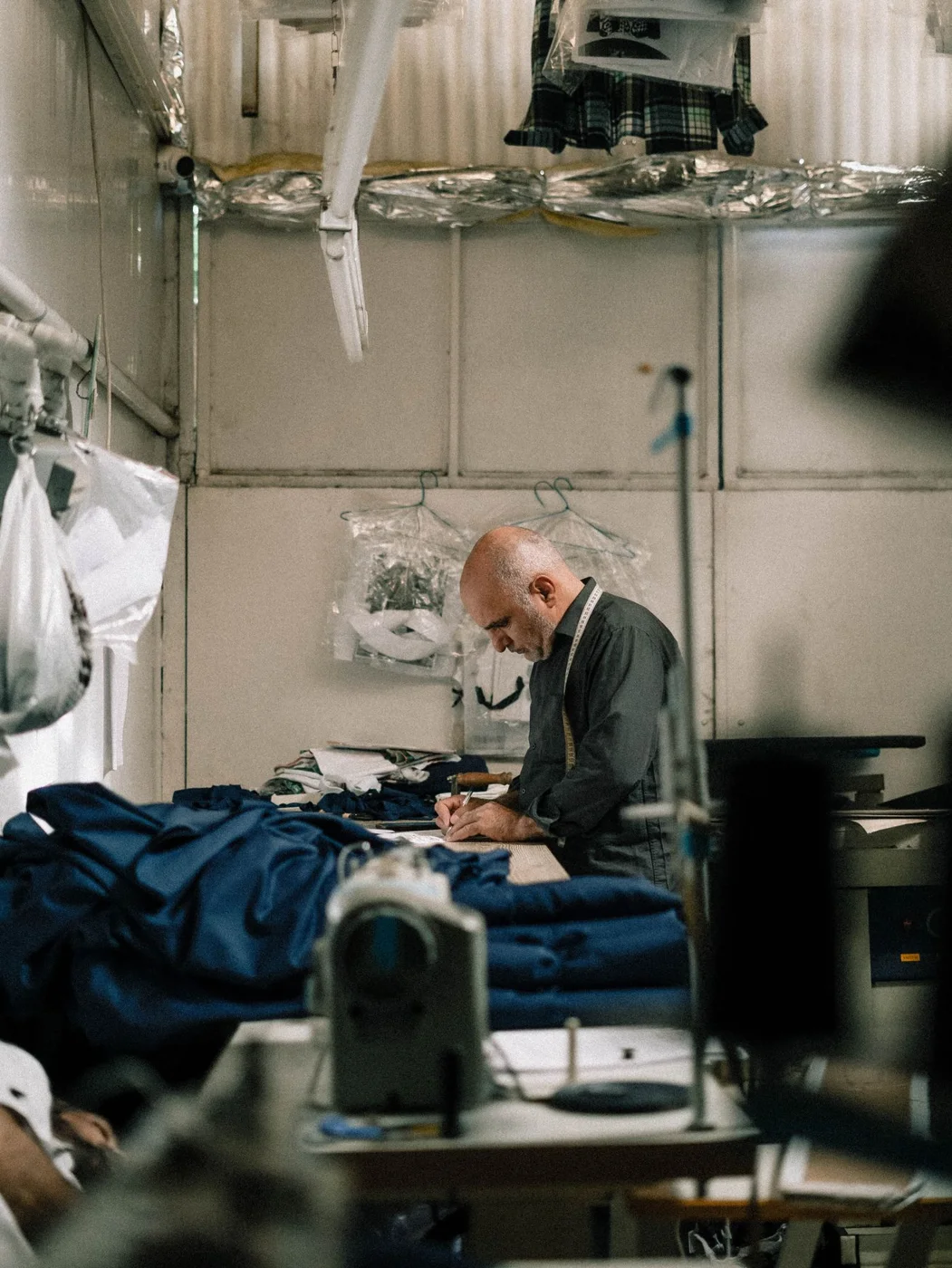
A tailor can give a more useful assessment when the garment is presented as part of its real outfit. Hem length changes with shoes, sleeve placement changes over a sweater, and a dress can sit differently with different underlayers. Prepare those details before the appointment.
Clean the garment according to its care instructions unless the tailor advises otherwise. Mention any recent washing, shrinkage, or unfinished cleaning issue. Do not assume that an alteration should be made before a garment has gone through the care process you intend to use.
Describe the problem in movement
Explain what feels wrong: a hem catches under a heel, a waistband gaps when standing, or sleeves pull when reaching forward. These observations are more useful than asking to remove an arbitrary number of inches without a fitting.
Bring the shoes intended for a trouser or dress hem. If the garment needs to work with several heel heights, say so; there may be a compromise rather than one length that is ideal for all of them. Wear the underlayers you expect to use and bring a typical sweater for a jacket fitting.
During the fitting, sit, walk, and move as requested. A pinning arrangement that looks good while standing still may need adjustment for ordinary movement. Tell the tailor if you prefer more room rather than accepting a close fit that does not suit you.
Ask what the alteration changes
Shortening a garment can affect pockets, vents, trim, or proportions. Taking in a lined jacket involves more than the visible outer seam. Ask which details will be preserved, moved, or changed, and whether the work is reversible.
Discuss the available seam allowance and the fabric's condition. Letting out an item is limited by what is physically present; it is not the reverse of taking it in under every circumstance. Previous stitching marks may remain visible.
Get a price estimate and completion date before authorizing work. If the garment is needed for an event, allow time for a final fitting and any correction. Do not treat a verbal possibility as a guaranteed outcome.
For a new purchase still within a return period, compare the alteration plan with exchanging for a better starting size or cut. Alterations can be valuable, but they should solve a specific problem at an acceptable cost.
Leave with a clear understanding of the agreed work. Preparation helps the tailor assess the actual garment and helps you judge whether the finished result meets the purpose you described.