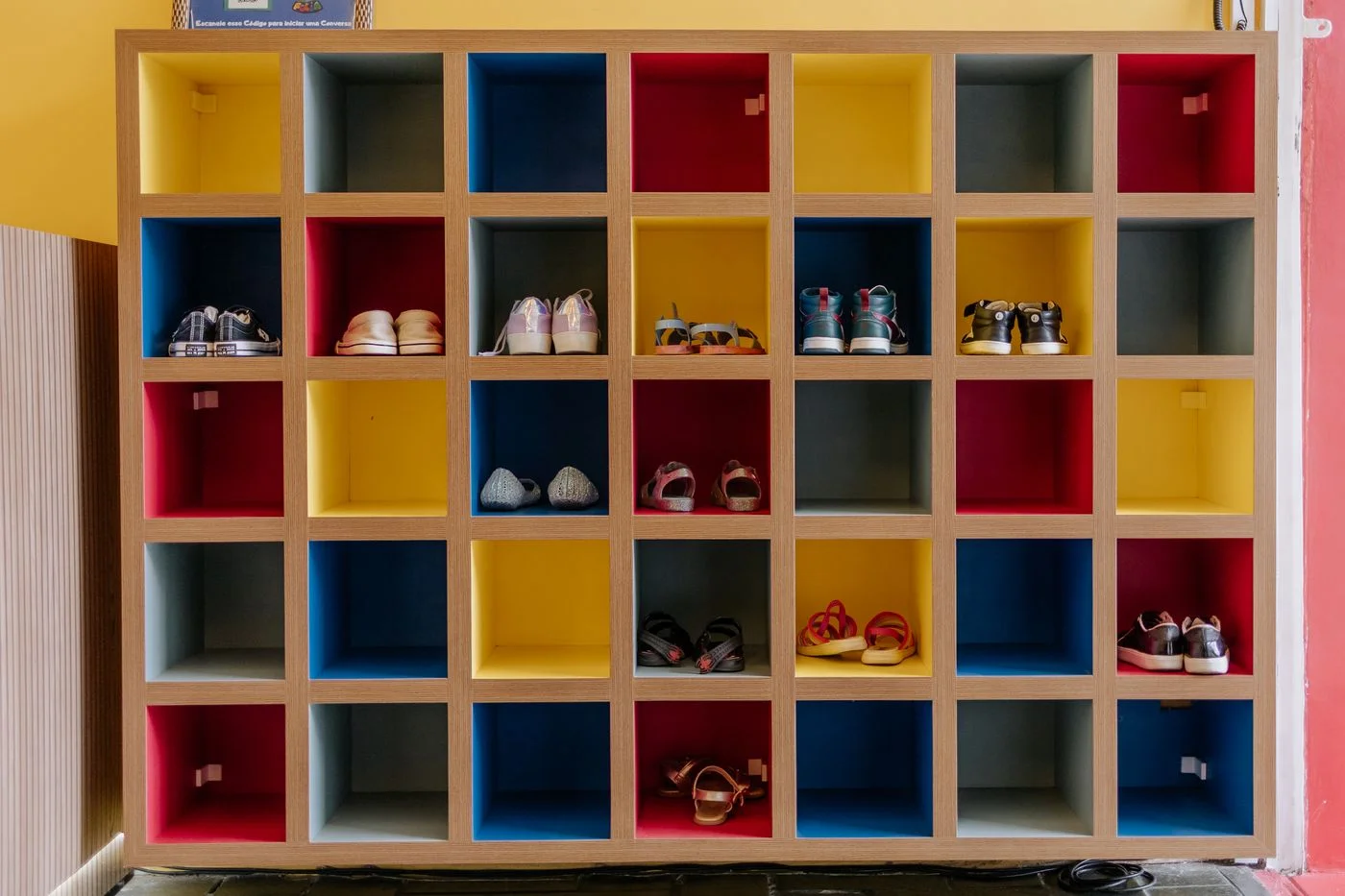
A small entryway can become crowded even with a modest shoe collection if the storage does not match the shapes being stored. Tall boots, wide sneakers, and slim flats occupy space differently. Measure the available area and count the pairs used regularly before choosing a rack or cabinet.
Start with clearance. Open the door fully and note the route people take while carrying bags. A shallow unit that keeps shoes organized is useful only if it does not create another obstruction. Include protruding handles, open doors, and shoes that extend beyond the shelf in the measurement.
Give current shoes the easiest access
Keep the pairs used most often at a reachable level. Less-used occasion shoes can live elsewhere if the entryway is tight. Trying to store every pair beside the door may force everyday shoes into awkward stacks that make them harder to put away.
Measure a representative large shoe and the tallest boot you want to include. Advertised pair capacity often assumes a particular size and arrangement. Adjustable shelves can help, but check whether enough useful height remains after adjustment.
Tilt-out cabinets deserve a specific fit check. Deep soles or high uppers may not fit the compartment even when a flat shoe of the same length does. A photograph of neatly arranged shoes is not a substitute for the internal dimensions.
Separate drying from long-term storage
Shoes that are wet or damp may need an open, appropriate place to dry according to the maker's instructions before entering a closed cabinet. A tray can protect the floor, but it should be easy to empty and clean rather than becoming a permanent pool beneath the shoes.
Avoid placing storage where direct heat affects footwear. Material-specific care instructions should guide drying; the convenience of a radiator nearby does not make it the right location. Leave enough room that shoes are not crushed against one another while damp or drying.
Think about cleaning the unit itself. A removable tray or accessible lower shelf can be easier to maintain than a narrow cavity that collects grit. If the furniture requires anchoring, follow its installation instructions and choose a suitable location.
The most useful system makes putting shoes away easy after an ordinary day. Start with the pairs in active use and the space needed to move safely through the entryway, then add storage for the rest only if the room genuinely allows it.