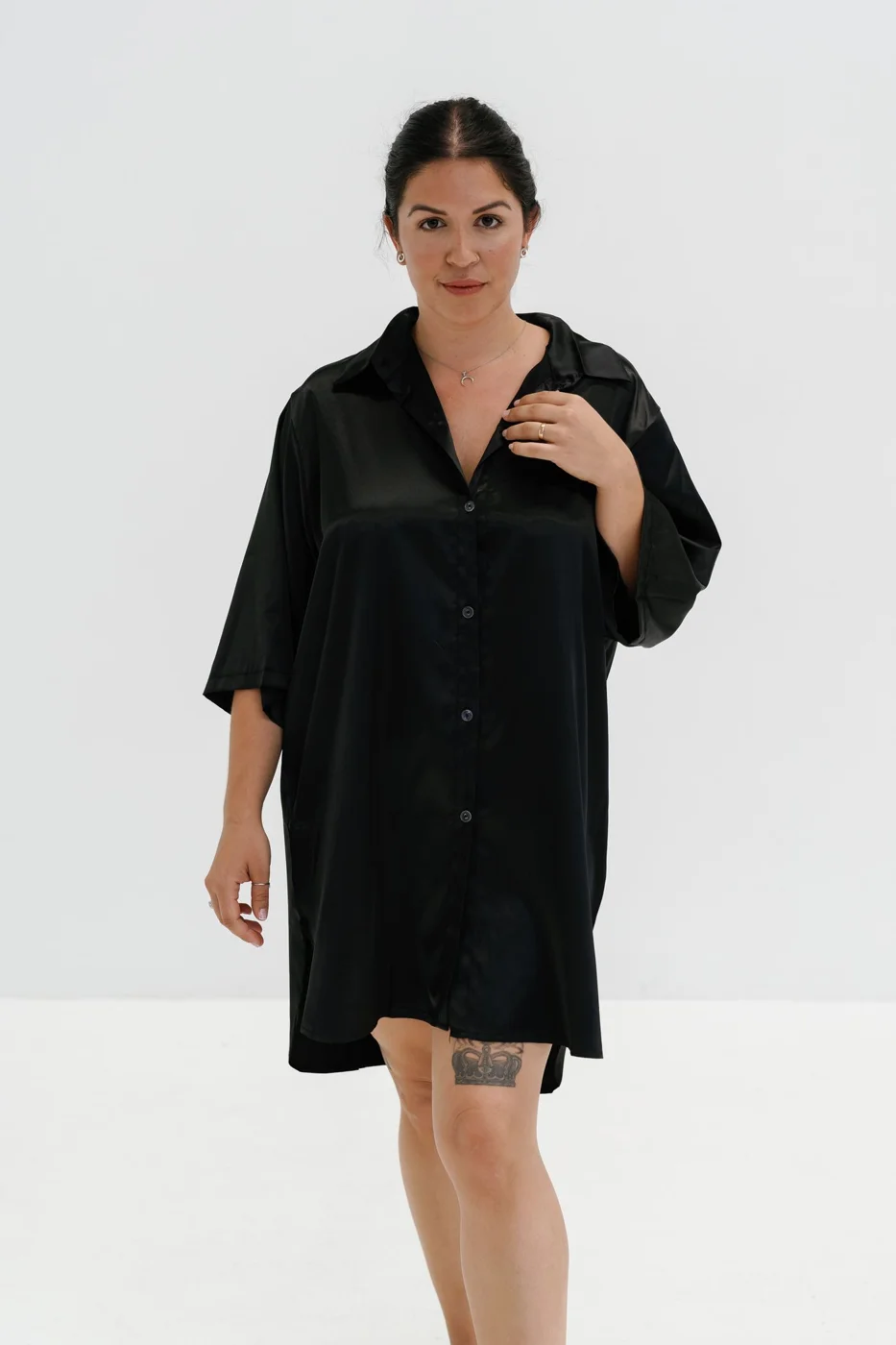
A dress can look loose while still restricting movement. The limiting point might be an armhole, a fitted waist, a narrow lining, or a skirt that has less room than its outer layer suggests. When shopping for summer clothes, test those individual areas instead of treating a floaty silhouette as a guarantee of ease.
Put the dress on with the underlayers and shoes you are likely to use. This is especially useful for a dress whose neckline or straps require a particular bra. If you would need to buy several additional pieces to feel comfortable wearing it, include that in the purchase decision.
The seated version matters
Sit on a normal-height chair with your feet on the floor. Notice whether the waistband presses, the skirt rides higher than you prefer, or the neckline changes position. A garment that is comfortable standing can feel very different when fabric is drawn across the lap.
If the dress has a lining, pay attention to it separately. The outer skirt may move freely while the inner layer grips at the thigh or pulls upward. A lining that stops at an awkward point can also create a visible horizontal edge through a light fabric. Check from the side and back as well as the front.
Stand up without rearranging the dress immediately. This reveals whether the garment settles by itself or needs repeated attention. Occasional adjustment is normal, but decide whether the amount fits the day you are buying it for.
Raise your arms and take a step
Reach toward an imaginary shelf or overhead transit handle. Does the entire dress lift with your arm, or is there enough movement in the armhole? Check whether a sleeveless opening reveals more than you want. A low armhole may feel airy but require an extra layer, changing the original warm-weather appeal.
Walk and step up onto a low platform if one is safely available. A slit can add movement, but its placement and height may expose more when seated or climbing stairs. A narrow hem without a slit may limit stride. These details are easier to evaluate before committing than after arriving at an event.
Pockets are worth testing with an empty hand. Very low openings can pull the bodice down when you reach inside; heavy items may distort a light skirt. Decide whether the pocket is genuinely useful or merely a pleasant listing detail.
Check the fabric in ordinary light
Move near a window if possible. Light colors and open weaves can change appearance under daylight. Look for transparency at the waist, where fabric may be stretched, and at the lower skirt. A dress that works only with a slip may still be a good purchase, but the complete outfit is what you should evaluate.
Finish by reading the care label and imagining the dress after laundering according to its instructions. If it requires a level of pressing or specialist care that you do not want, choose another construction. The most useful summer dress lets you sit, move, and get dressed without building a new routine around it.