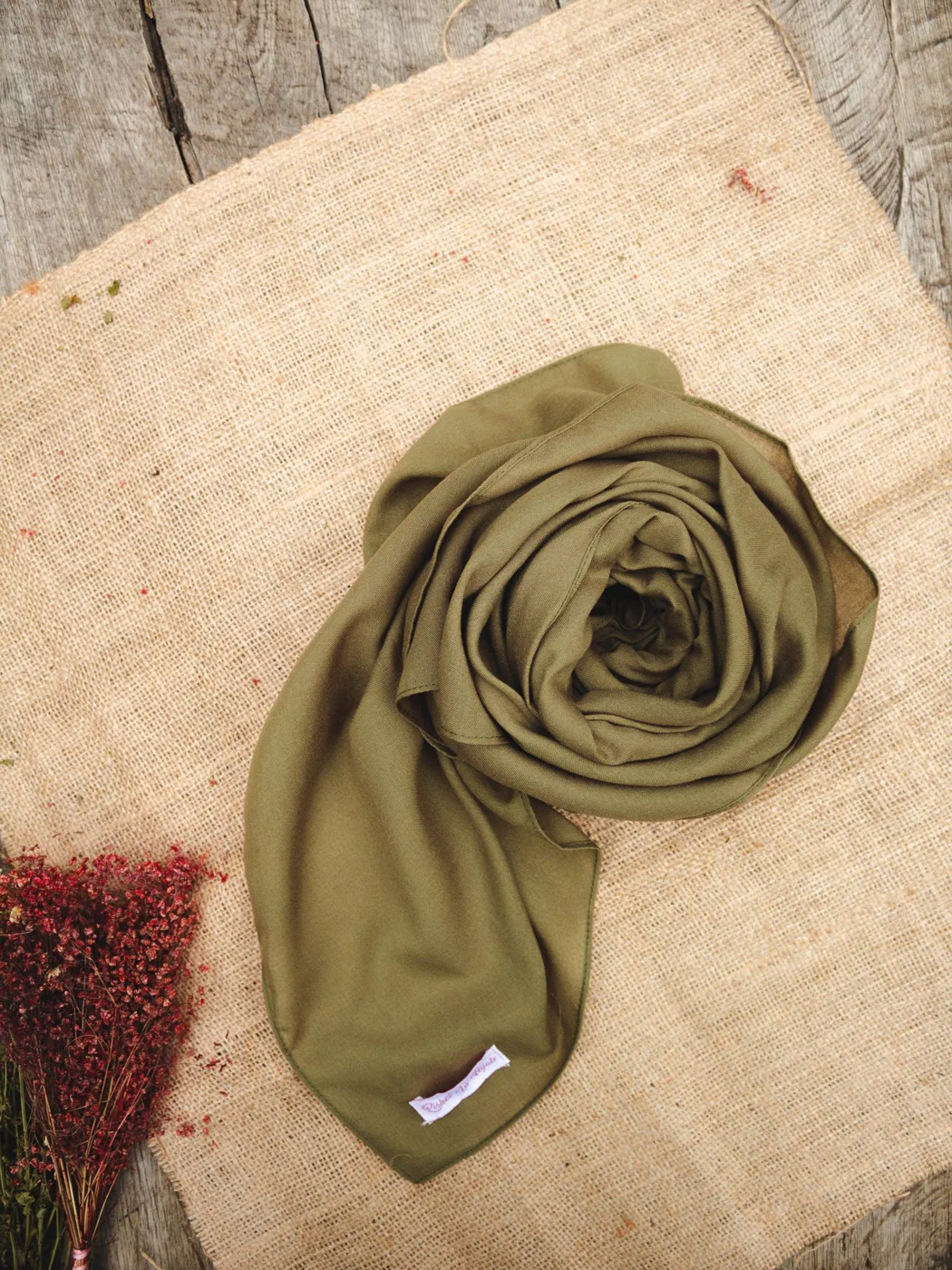
A generously sized scarf can look inviting on a hanger and become a bulky knot beneath a coat collar. If you plan to wear it inside your outerwear, bring the coat into the decision. Collar height, lapel shape, and the space around your neck all affect what works.
Try the scarf using the arrangement you expect to repeat. A single drape, one wrap, and a knotted loop place different amounts of fabric at the front. Close the coat normally and check that the zipper or buttons meet without trapping the scarf.
Thickness multiplied by folds
A scarf that feels thin when held flat can become substantial once folded lengthwise and wrapped twice. Consider the number of layers rather than thickness alone. A narrower scarf may provide the coverage you want with less material around the collar, while a broad one can double as a shoulder wrap when you are indoors.
Length also changes the result. Very long ends may bunch below a short jacket or need to be tucked into pockets. A shorter scarf can be tidier, but it must still leave enough length for your preferred knot. Compare it with a scarf you already use instead of judging scale from a model photograph.
Surface feel at the actual contact points
Hold the fabric against the area where it will sit, if store rules allow. A scarf that feels pleasant in your hand may feel different at the neck. Check the edges, seams, and label too; they may make more contact than the center panel.
If you wear earrings, a textured or open knit can catch on their details. Inspect the combination gently rather than pulling the scarf across jewelry. A smooth weave may be easier for your routine, but its care instructions still deserve attention.
Look at the coat's closure after moving your head and shoulders. The scarf should not repeatedly migrate into the zipper path. If it does, change the tying method or try a narrower shape rather than assuming you will remember to rearrange it every time.
A scarf is useful when it integrates with the coat you own. Choose the width, length, and surface that give comfortable coverage after the outerwear is fastened. That test is more informative than buying the largest option and hoping the extra fabric will find a place.