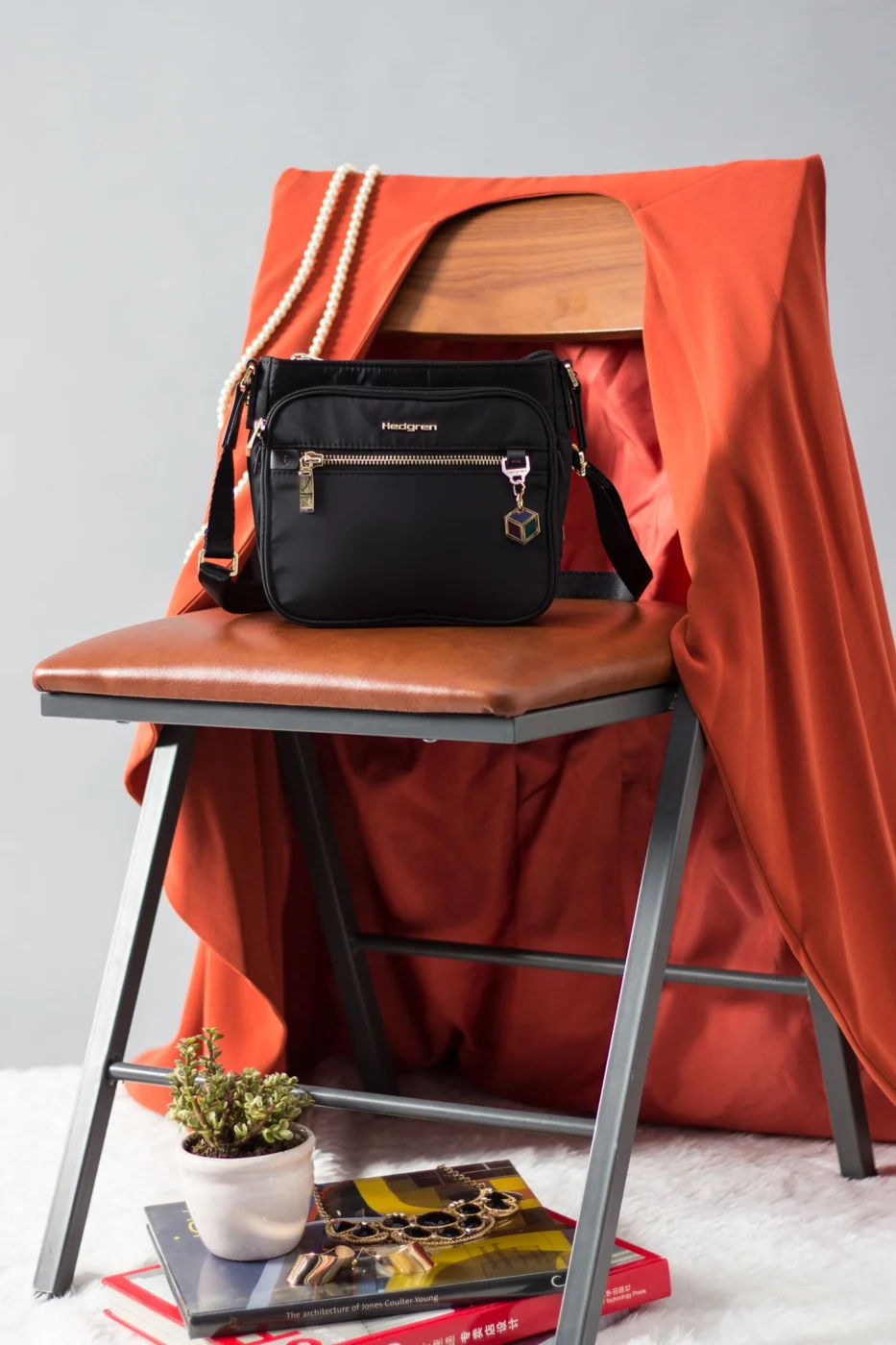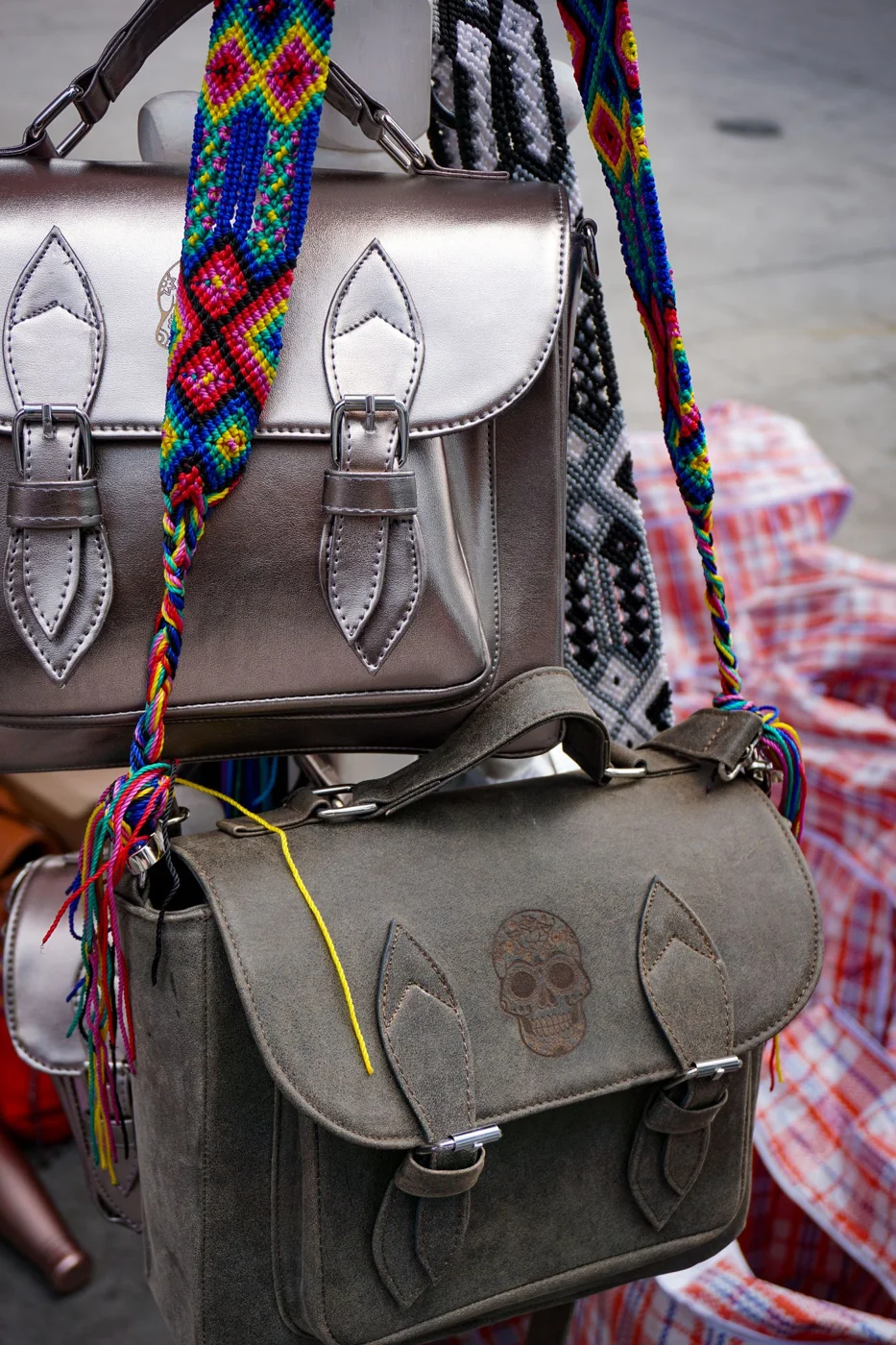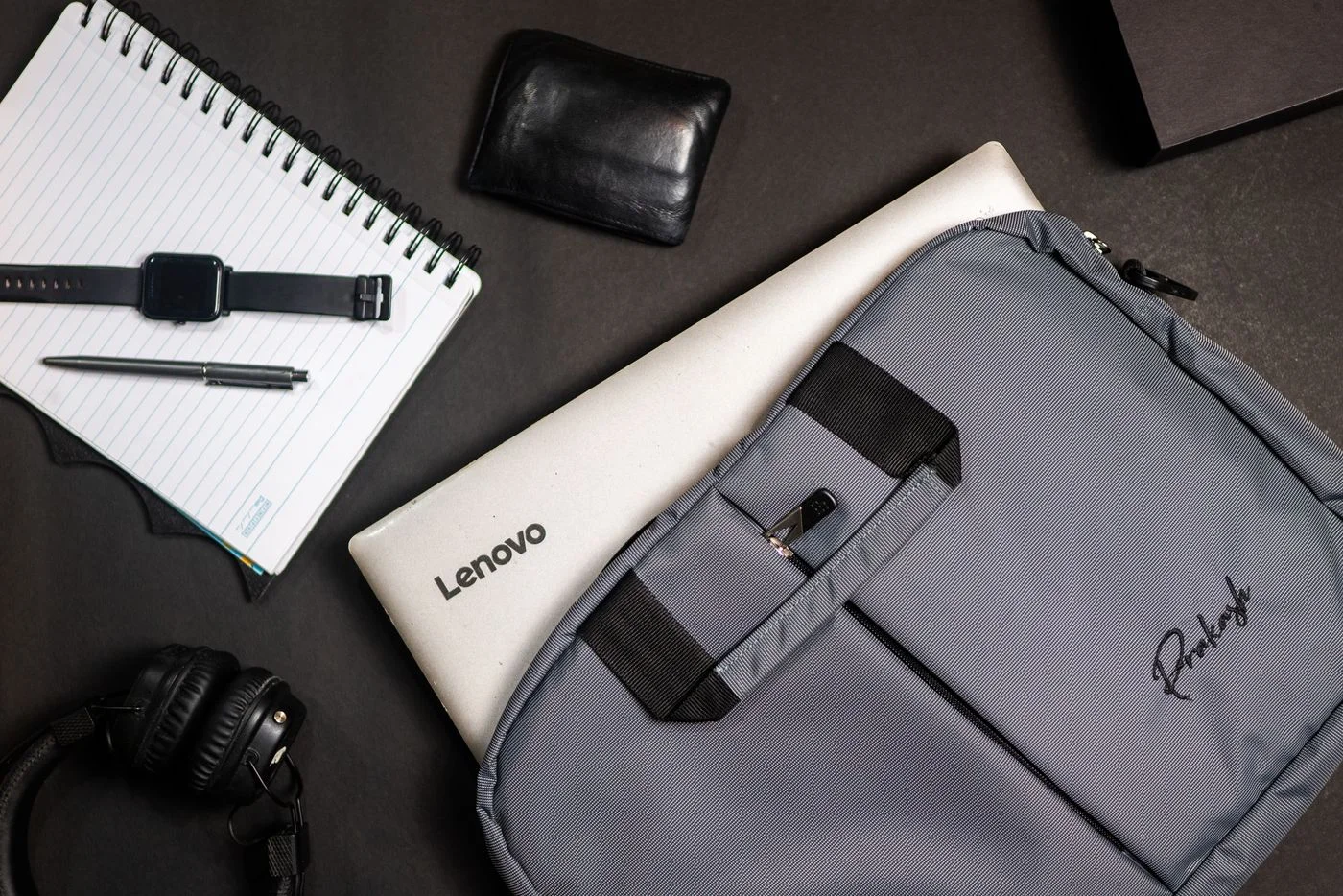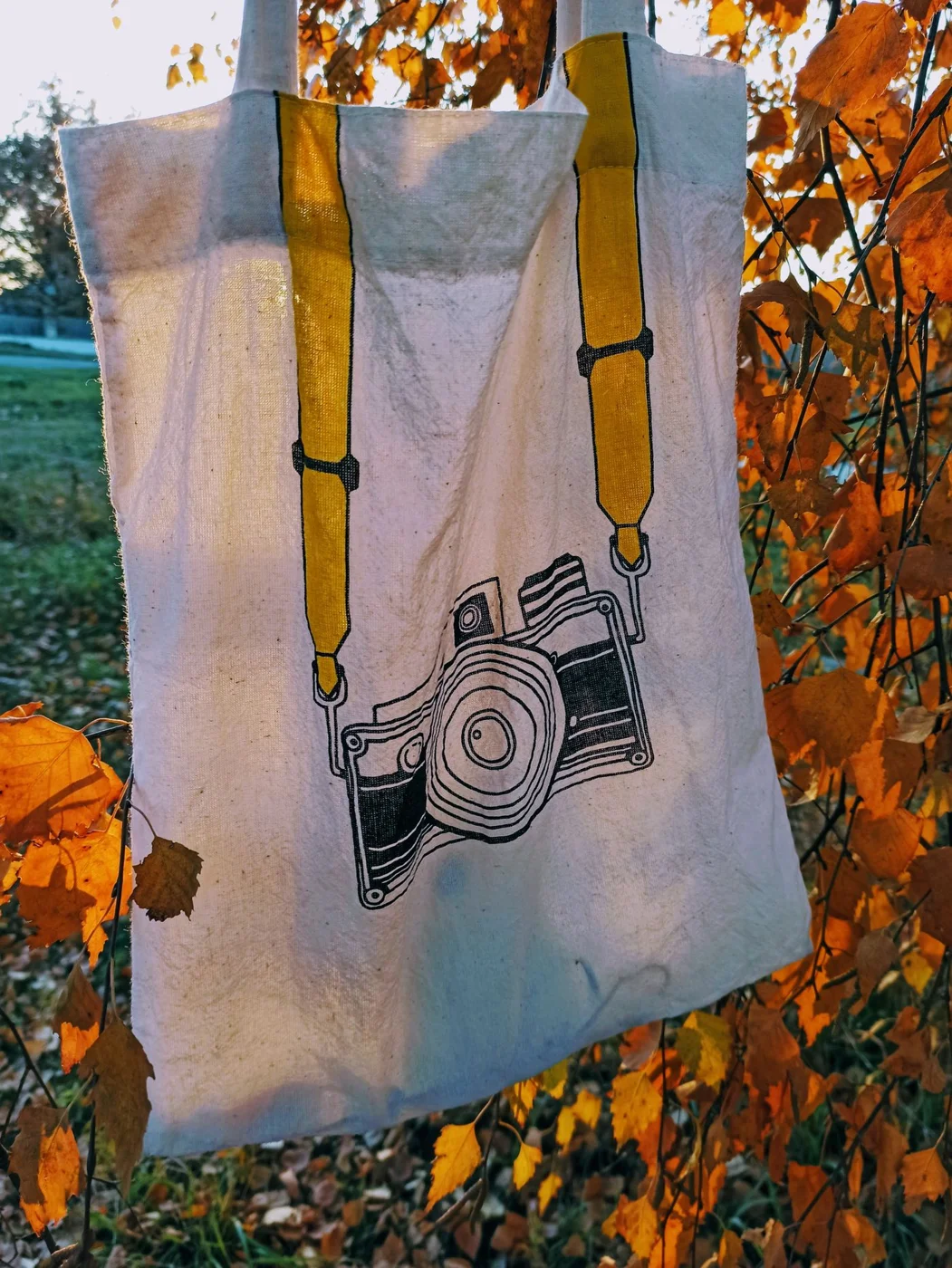
A tote photographed with tissue inside can look far more orderly than the same bag carrying groceries or a laptop. Before comparing colors, gather the objects that make up an ordinary day. Their shape matters as much as their combined volume: a square lunch container, a tall bottle, and a flat notebook all demand different parts of the interior.
Try a permitted indoor packing test with clean items. Put the heaviest object near the center, close the bag if it has a closure, and lift it by both handles. Watch the bottom. A soft base may form a deep point around a bottle, while a reinforced base may hold a wider rectangle. Either can work, but the resulting shape needs to suit how you carry it.
When a wide opening becomes a narrow interior
Measure the base and opening separately. A tote that tapers sharply can accept a large folder at the top but bend its corners farther down. Internal pockets may also take room away from the main compartment once they contain a phone or wallet. Published outer measurements rarely describe all these obstacles.
Consider access after packing. If your keys sit underneath a lunch box, a generous capacity has not solved your daily problem. A small reachable pocket or tether may be more useful than several decorative compartments. Test whether you can reach it while holding the bag normally rather than placing everything on a table.
Handles are part of the loaded shape
A bag can fit your belongings and still be awkward over a coat. Check the handle drop with the layer you expect to wear. Loaded sides may spread under your arm and shorten the effective clearance. Thin handles can also twist when the contents shift; a wide handle is useful only if it rests where you want it.
Look at where handles join the body. Uneven stitching, stretched attachment points, or pulling around the seam deserve attention before the return period ends. This inspection does not establish a weight rating. Follow any load guidance supplied by the maker and avoid treating a fashion tote as equipment for carrying unusually heavy objects.
Finally, set the packed bag down. It need not stand upright to be good, but you should know whether it collapses, tips toward the bottle, or opens across the floor. Choose the behavior that fits your routine, rather than paying extra for a shape visible only in the product photograph.