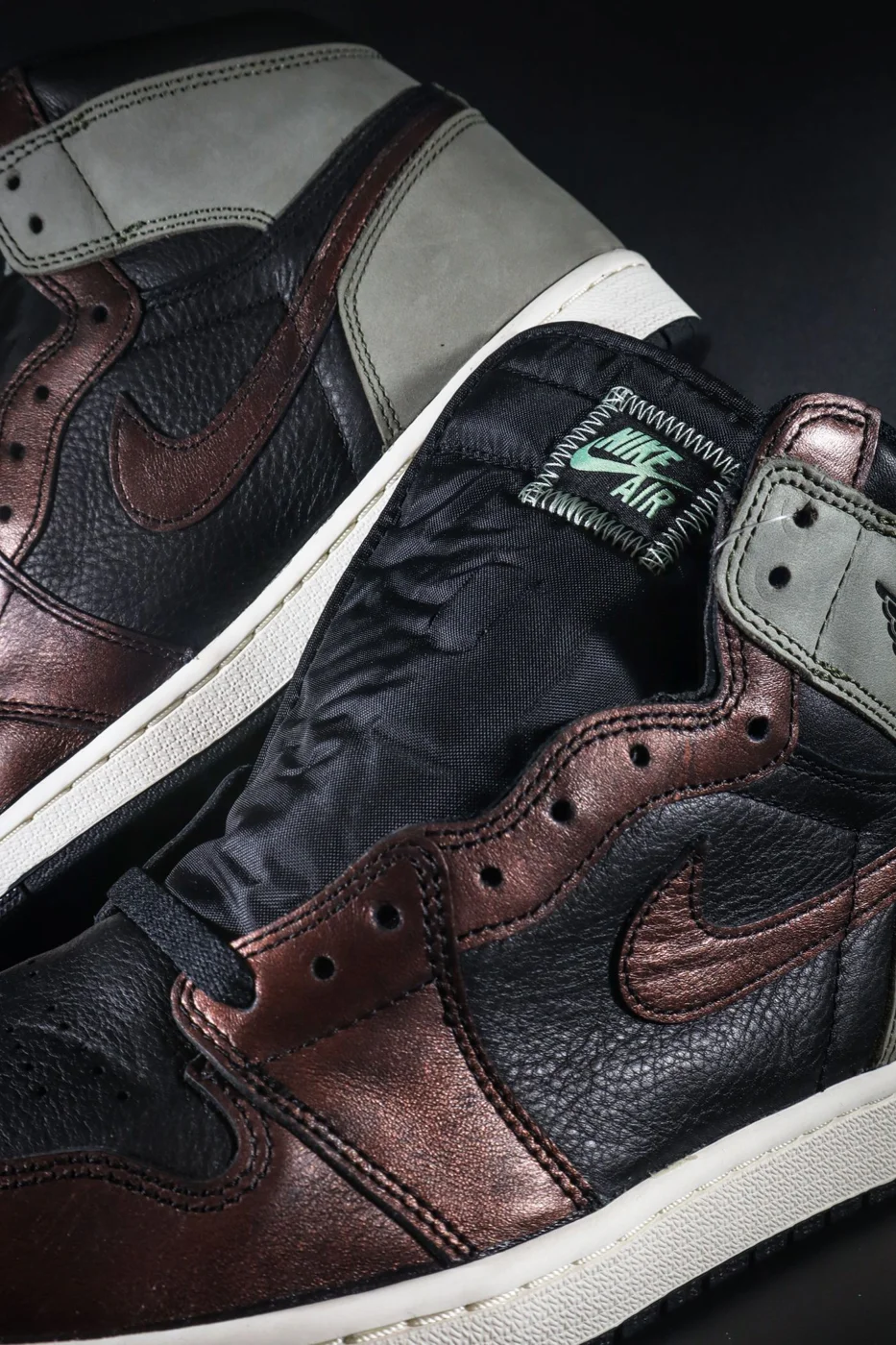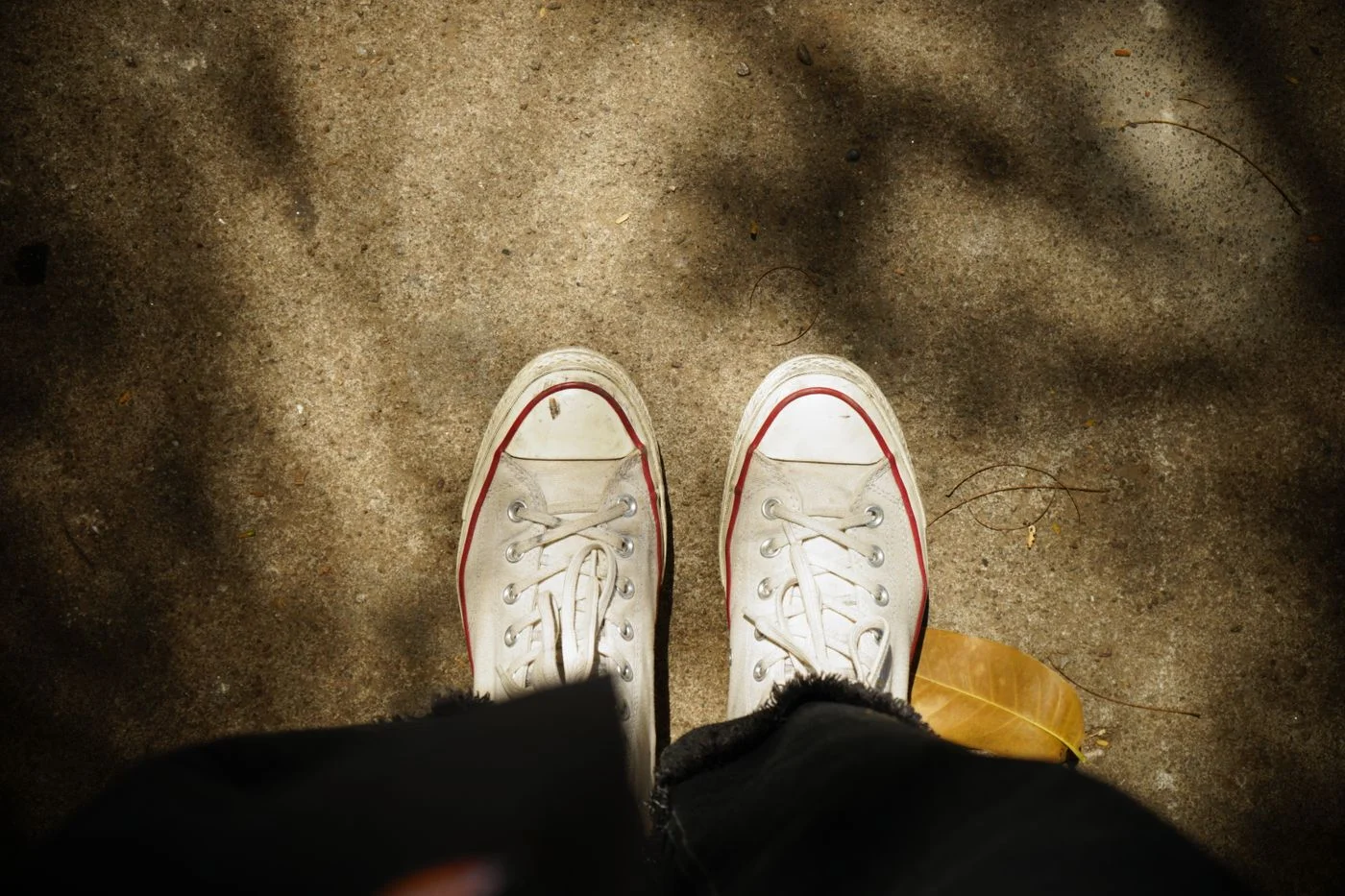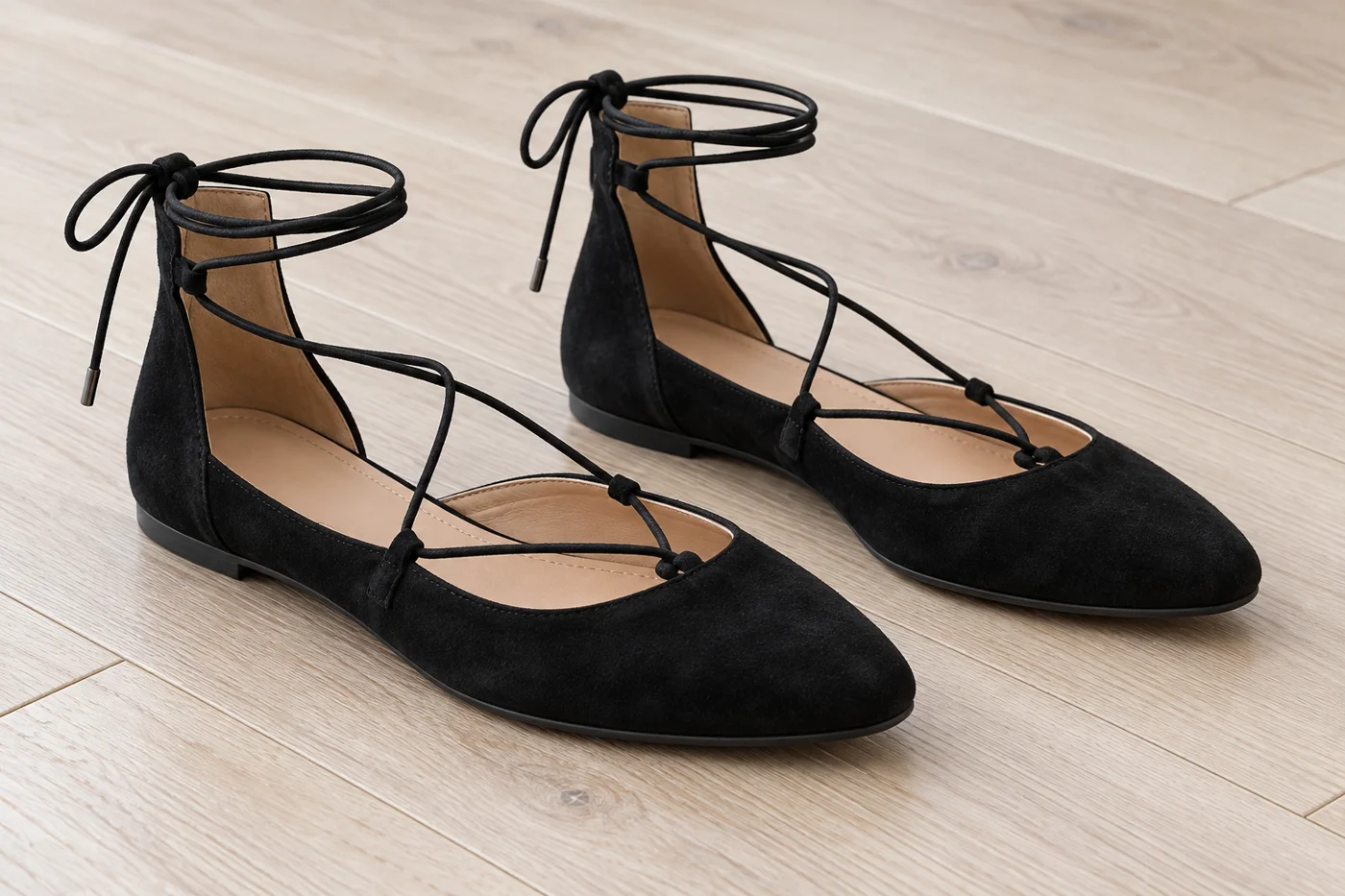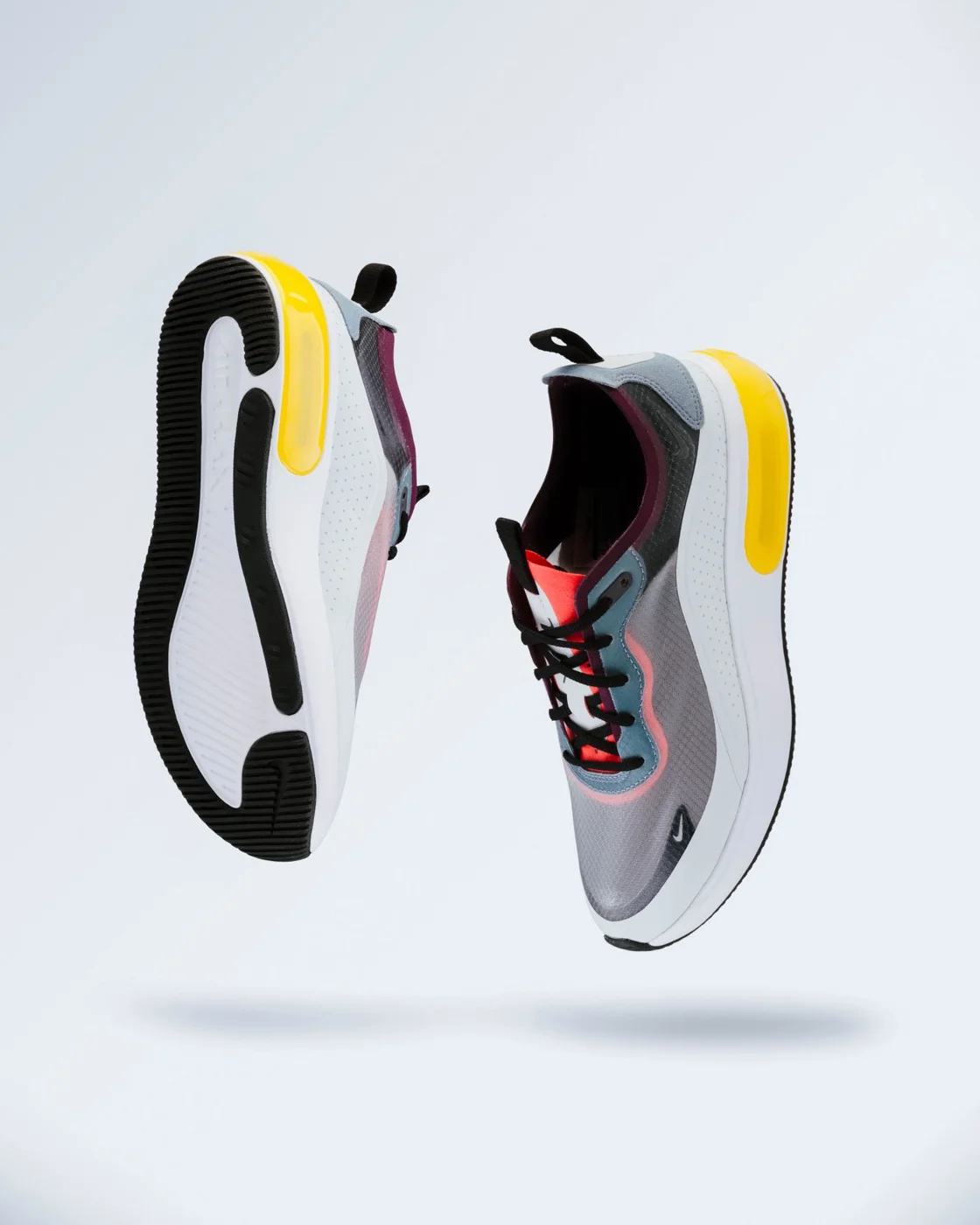
A familiar shoe size is useful information, but it is not a complete description of your foot or a guarantee across sneaker models. Toe shape, upper volume, heel construction, and the placement of the sole's flex can change the fit even within one brand. For everyday sneakers, compare the shoe in motion instead of stopping when the label looks right.
Try both shoes with the socks you intend to wear. Lace them normally from the lower eyelets upward rather than tightening only the top. Stand and let your foot settle into the shoe. A quick seated try-on leaves out the way your foot occupies the interior when supporting your weight.
Check more than the front gap
There should be suitable room for your toes without them pressing against the end or being crowded from the sides. The exact feel depends on the shoe's shape and intended use; a pointed-looking exterior does not reveal the usable space inside. Move your toes and notice pressure over the nails or across the widest part of the foot.
Look at the upper while standing. If it bulges strongly over the sole edge or the eyelet rows are pulled unusually far apart, another width or shape may be worth comparing. If there is excess material folding over the top, the shoe may have more volume than you need. These observations are more useful than assuming length is the only variable.
Walk through a small, repeatable route
On a clean permitted surface, walk forward, turn, and pause. Check whether the heel remains secure or repeatedly rises far enough to rub. Notice whether your foot slides forward during a stop. Do not compensate for a fundamentally loose shoe by pulling the laces painfully tight.
Try a second size or width using the same route. Compare like with like: the same socks, similar lacing, and both feet in each option. Wearing one size on the left and another on the right can confuse the result because feet may differ. A short comparison is not a promise of all-day comfort, but it helps identify obvious mismatches.
Match the sneaker to its ordinary job
A sneaker for a short office commute may not need the same features as one intended for running or long hikes. Follow the manufacturer's intended use for specialized activity rather than treating an athletic appearance as proof of performance. For ordinary wear, consider weight, closures, and how the shoe works with the pants you repeat.
Inspect the return terms before buying multiple options online. Keep the soles clean and the packaging intact while deciding. Do not assume that a tight shoe will stretch into the correct shape after outdoor wear.
Record the model, size, width, and what fitted well once you find a pair you like. That note is more useful than remembering only a number. When buying a replacement later, still check for changes in the model or construction before assuming the old fit remains identical.