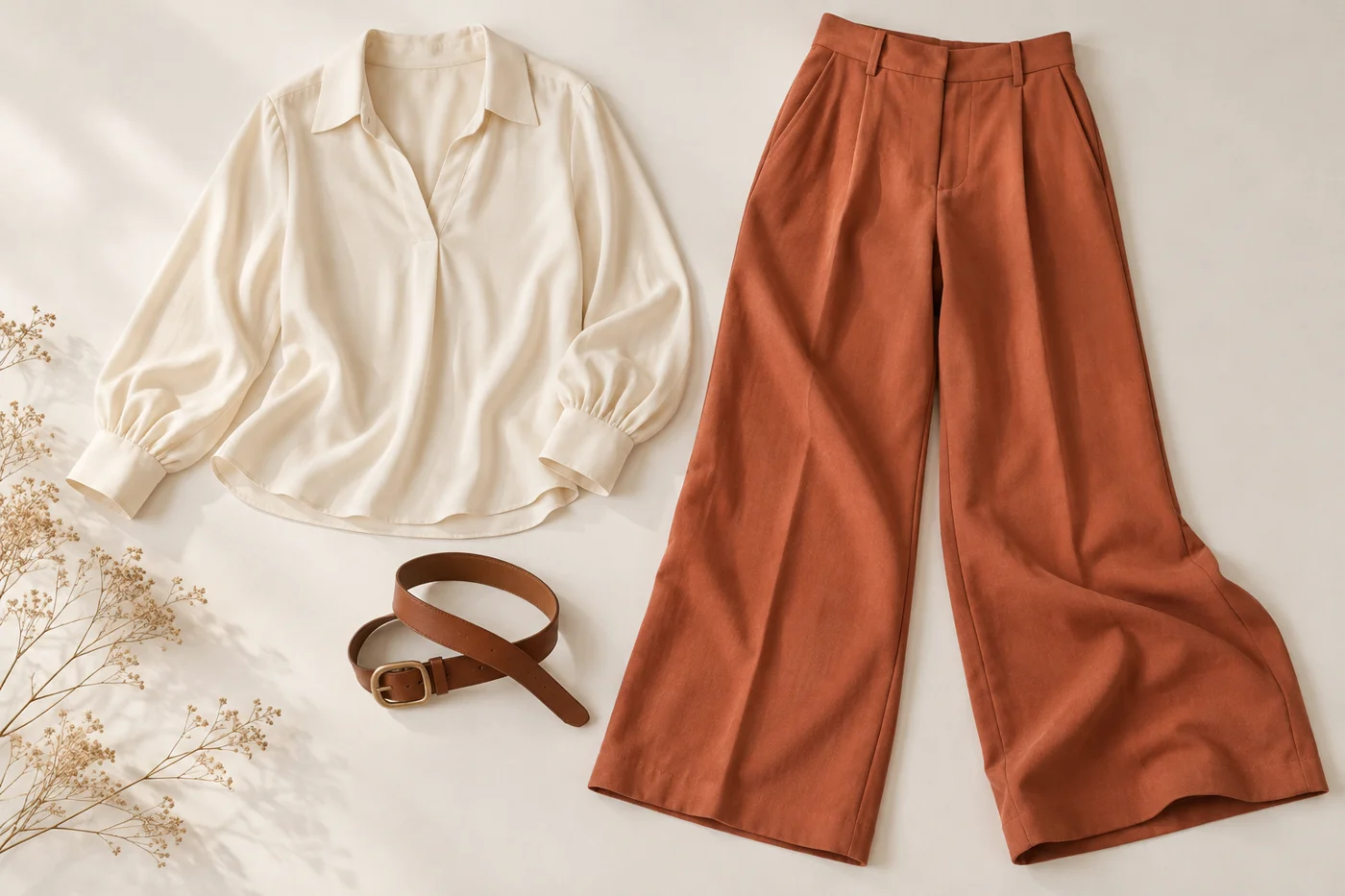
A matching set removes some decisions, but it also links two pieces that may not fit or serve you equally well. Coordinated separates let you choose each garment on its own merits while still creating a deliberate outfit. The process works best when you start with a clear relationship between the pieces rather than trying to imitate an exact set by accident.
Choose one anchor item: perhaps trousers that fit well or a jacket you want to wear often. Then decide what the second piece should do. It might repeat a color, contrast in texture, or balance a wide silhouette with a simpler shape. You do not need every element to match.
Avoid the almost-identical trap
Two navy or black fabrics can look close on separate screens and noticeably different together. If an exact match matters, compare them in person or confirm the maker's collection and color identifiers. Otherwise, a deliberate contrast is often easier to work with than a near match that looks unintended.
Texture can make that contrast clearer. A smooth trouser with a textured knit reads differently from two suit-like fabrics that are nearly, but not quite, the same. Hold the pieces beside each other in ordinary light and look at the complete outfit from a distance.
Let each half fit its own job
Use the correct size for the top and bottom independently. Check the overlap at the waist while seated and reaching. A long top may conceal a waistband you like; a cropped one may reveal more than you prefer. The relationship between lengths matters as much as the individual fit.
Try each piece with another garment you already own. If the trousers only work with the new top, you have recreated the limitations of a fixed set. If both create another useful outfit, the extra flexibility is real rather than hypothetical.
Care instructions also deserve comparison. Pieces that look coordinated now may need different washing or cleaning routines. That is manageable when intentional, but do not assume they can always be treated as one laundry item.
Finally, add up the whole cost, including alterations and any missing underlayer. Separates may cost more than a discounted set, or less. The better value is the combination that fits, works beyond one arrangement, and does not require further purchases just to become wearable.