Belt size is not always the same number as your pants size. Pants can sit at different heights, waist labels vary, and belt makers may measure their products differently. A belt you already wear comfortably offers a more useful starting point.
Lay that belt flat without stretching it. Identify the hole you normally use, then measure from the point specified by the prospective seller's size guide. Many guides use the buckle's fastening point to a central hole, but you should check rather than assuming. Measuring to the end of the leather gives a different figure.
Match the wearing position
A belt worn through trouser loops at the hip may need a different length from one worn over a dress at the waist. Measure in the position intended for the new belt, with the clothing layer you expect beneath it. A thick cardigan can alter the required adjustment considerably.
If the new belt uses holes, look for a size that places your ordinary fit near the middle of the usable range. That leaves room for clothing differences without making the tip excessively long. Check the total number and spacing of holes if the listing provides them.
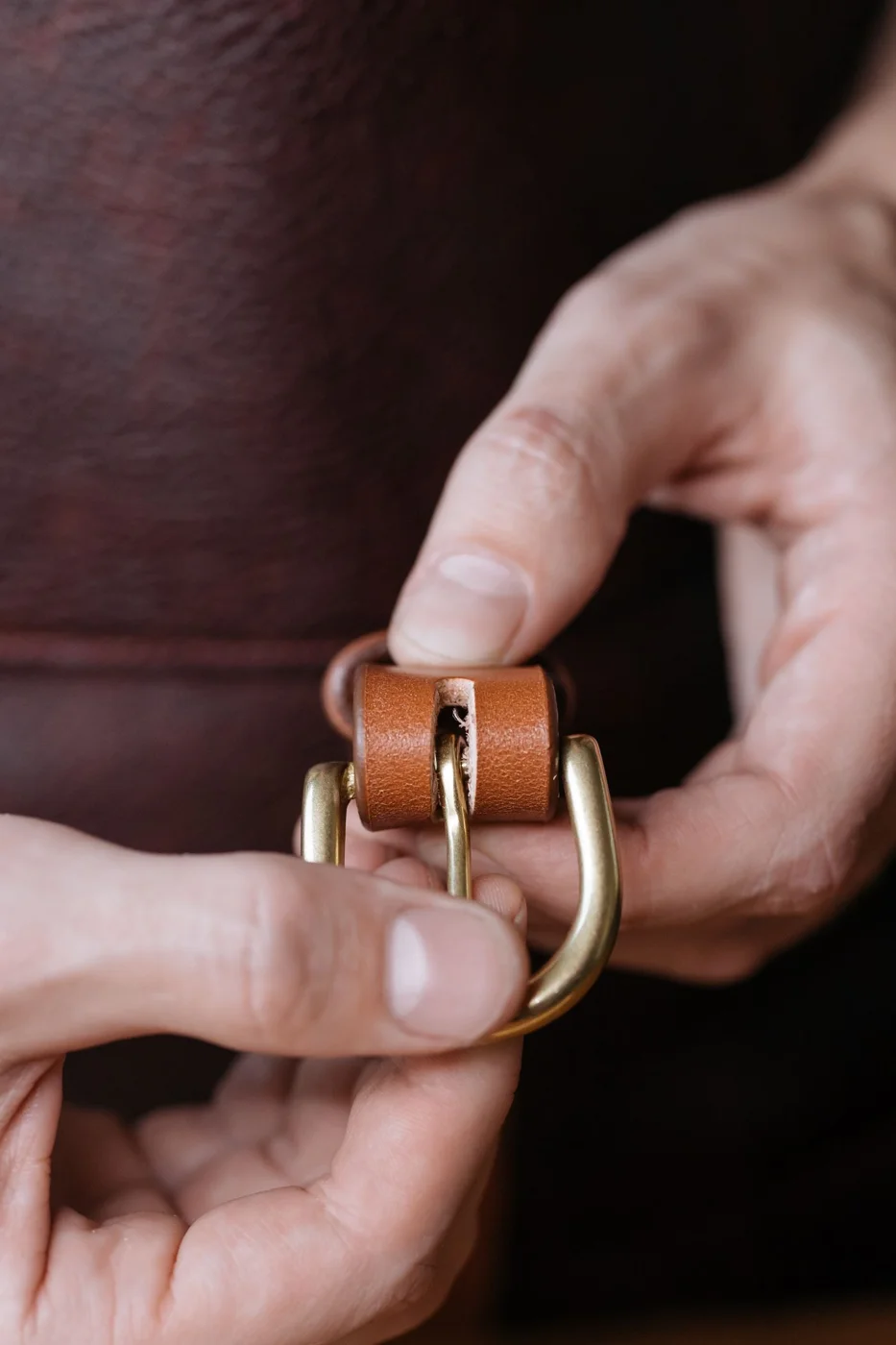
The tail needs somewhere to go. A belt can fasten correctly and still leave a long loose end if the first trouser loop sits far from the buckle. A movable keeper can help, but it should hold the tail without bunching.
Width can rule out the right length
Measure the openings of your trouser loops and compare them with both the strap and its thickest finished edge. A belt that has to be forced through every loop will be annoying to remove and may strain the clothing. A large buckle can also feel intrusive when seated even if the strap fits neatly.
For a reversible belt or one with interchangeable hardware, read the manufacturer's instructions before attempting to shorten it. Some designs are intended to be cut to size; others are not. Cutting or punching holes may make the item ineligible for return and can change the way its edges or fastening behave.
Keep the reference measurement in your shopping notes along with the seller's method. That makes later comparisons easier without treating a printed size as universal. A well-chosen belt should close at a comfortable setting, pass through your clothing, and leave a manageable tail in the position where you actually wear it.